

Skip to content

Arch height is a major characteristic of a wide range of foot shape variants. Low arch height results in flat feet, or pes planus. A flat foot is not usually abnormal in itself, but it can predispose an individual to many musculoskeletal conditions and injuries. Therefore, it is used by non-specialists as an umbrella term to describe any foot problem which features a low arch. This is why just using a generic arch support often does not resolve an individual’s foot pain, even if he/she has flat feet. “Flat feet” is not a medical diagnosis by itself.

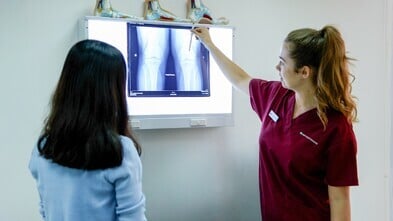
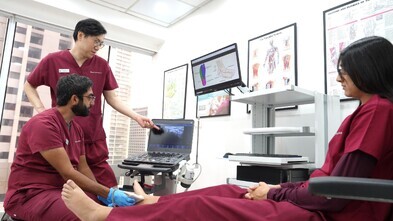
As podiatrists, we will conduct a full biomechanical and gait analysis in order to make a comprehensive diagnosis of a patient’s present and future conditions. Addressing the low foot arch is the first step to identifying the cause and providing suitable therapy options.

Flat feet are a very common condition in Singapore. This is due to the genetic demographics of the region where this type of condition may be hereditary, acquired or due to ligamentous laxity. The artificial surfaces we walk upon every day expose our feet to greater wear and tear or degeneration.

The foot is the foundation of the whole body. Fallen arches put the feet out of alignment. Consequently, greater stress is placed on other joints in the body to help compensate. This is often the cause of soft tissue pathology; the two most common ones are Achilles tendonitis (tendon overuse injury) or Plantar fasciitis (inflammation of the fascia). Flat feet may also contribute to chronic pain in the knees, hips, or lower back if left untreated.
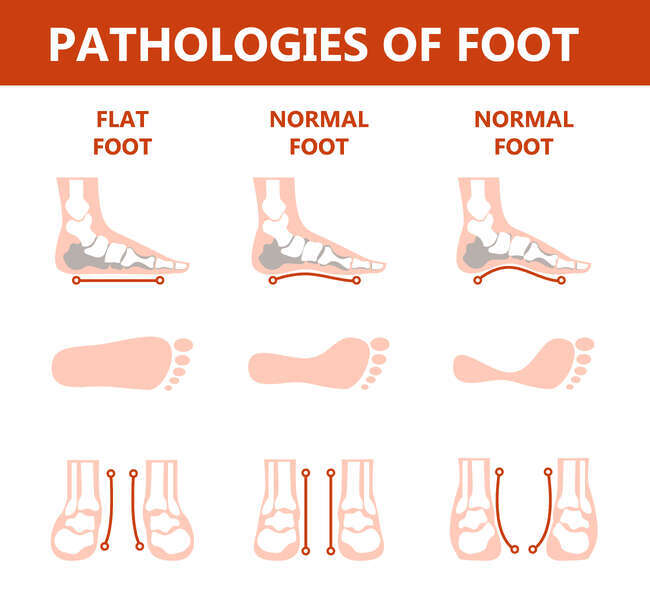
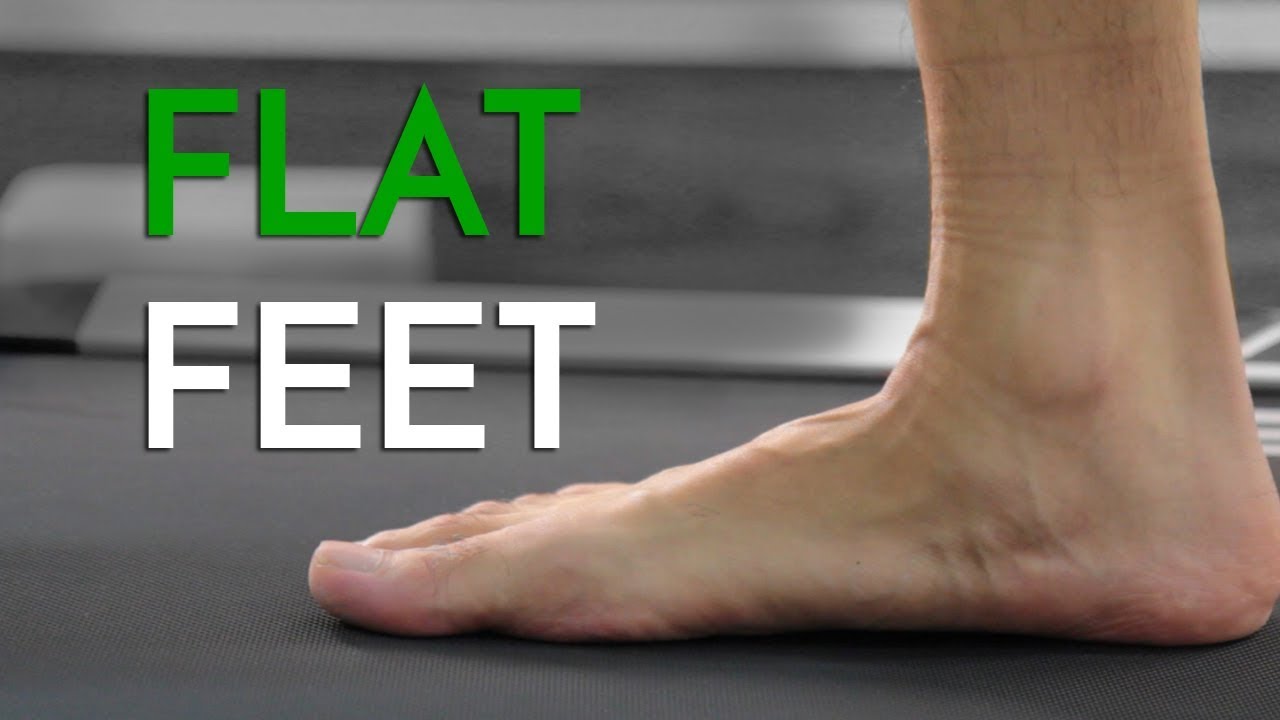
flat-feet-flat-foot-size-1
9tlzxA8o0w0-HD

Types of Flat Feet: Congenital (Paediatric) and Adult-Acquired

There are 2 kinds of flat feet:

Congenital flat foot is hereditary and present in varying degrees of severity in children as young as 2 years old. In most paediatric flat feet cases, the child may appear to have arches while they are seated or standing on tiptoes. The medial arch only collapses when the child stands up. Flat-footed individuals may also be diagnosed with hypermobility, a condition related to the laxity of ligaments; that can also cause problems elsewhere in the lower limbs, such as the knees and hips. Rigid flat feet may require closer monitoring.

Adult-acquired flat foot can be caused by conditions such as posterior tibial tendon dysfunction (PTTD), rheumatoid arthritis, injury or diabetes. If unaddressed, the affected foot may deform and collapse more and more over time, leading to deformity. This can result in loss of mobility, postural changes, and chronic pain extending all the way up to the spine.

Flat-footed patients may experience symptoms such as:

  • Pain on the inner side of the ankle and arch
  • Pain in the leg and knee after activity or with high-intensity sports
  • Pain in the joint due to impingement

Common Causes and Risk Factors for Flat Feet

Flat feet, also known as fallen arches, can occur for a variety of reasons. In many cases, the condition is inherited. However, flat feet may also develop over time due to:

  • Genetics – Some individuals are born with naturally low or absent arches
  • Injury – Damage that can weaken arch-supporting structures
  • Posterior Tibial Tendon Dysfunction (PTTD) – A common cause of adult-acquired flatfoot where the tendon becomes inflamed or torn
  • Rheumatoid arthritis – Joint inflammation can lead to structural changes in the feet
  • Obesity – Excess weight places added strain on the arches
  • Pregnancy – Hormonal shifts and increased weight may temporarily affect arch contour and support
  • Ageing – Natural wear on tendons and joints over time can cause arches to collapse
  • Weak or flexible flat feet – Arches that flatten when standing, even if a visible arch is present when sitting

Understanding these causes and risk factors is key to managing flat feet and maintaining comfort during standing or walking.
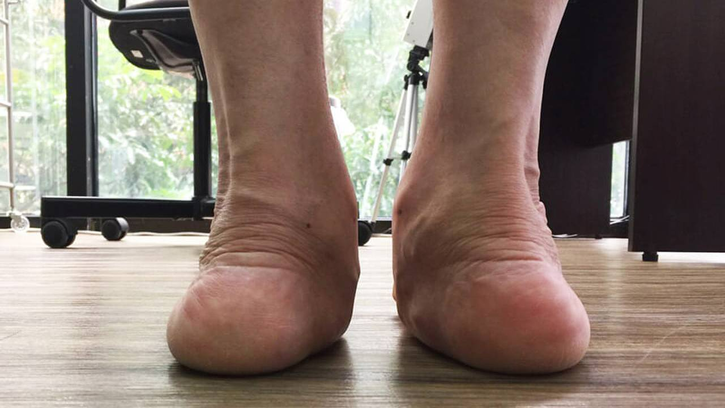
Kinds-Of-Flat-Feet-1

Recognising Symptoms of Flat Feet and Related Pain

While some individuals with flat feet experience no discomfort, others may notice signs that affect daily movement or physical activity. Common symptoms of flat feet include:

  • Foot pain, particularly in the arch or heel
  • Ankle pain or a feeling of instability while walking
  • Tired or aching feet, especially after standing or walking for long periods
  • Swelling along the inner side of the ankle
  • Flattening of the arch, more noticeable when standing
  • Outward tilting of the heel, sometimes accompanied by uneven shoe wear
  • Limited foot flexibility or stiffness in the arch
  • Knee, hip, or lower back discomfort due to altered posture or pronation

How to Tell if You Have Flat Feet

If the arch on the inner side of your foot appears low or completely flattened when standing, you may have flat feet. Try this simple method at home:

  1. Wet the soles of your feet
  2. Stand on a flat surface where your footprints will be visible, such as a concrete floor or paper
  3. Step away and observe the imprint

If the full outline of your foot is visible, with little or no curve along the inner side, it may indicate flat footedness.

Managing Flat Feet at East Coast Podiatry

Managing flat feet depends on the severity of symptoms and how they affect your daily life. While not all cases require medical attention, individuals with discomfort or reduced mobility may benefit from targeted care. Our podiatry approaches include:

Prescription Foot Orthotic for Support

Customising insoles for flat feet is a common conservative management. These customised foot orthoses are prescription-only medical devices tailored for individual patient needs to address specific pathology. The podiatrist will decide on the materials, densities and designs depending on the medical requirements and lifestyle choices of the patient. Due to advancements in technology and manufacturing, specific custom insoles for flat feet can also be fitted into pumps, court shoes, and even specialised footwear like soccer boots or hockey shoes.

For diabetic patients, total contact orthoses are tailored with the aim of offloading pressure and providing cushioning movement to minimise any abrasion or irritation against the skin. This serves to prevent foot ulceration that often develops in areas of high pressure.
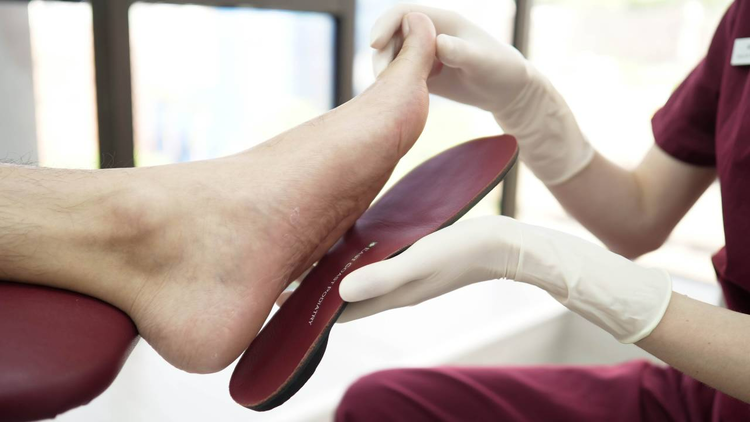
insoles-for-flat-feet-1

Ankle Foot Orthotics for Alignment

Ankle Foot Orthotics (AFO) is a highly specialised device that can accommodate almost all foot and ankle deformities to get patients back to a more normal walking gait. This device is a contoured, balanced orthotics that is articulated to the lower leg uprights; making it ideally suited to stabilise rotational forces at the midtarsal, subtalar and talocrural joints. Prescription of the device adds further enhancement or restriction of motion in sagittal, frontal, and transverse planes. It can be rigid, semi-rigid, or dynamic. They are customised with a full mould of the foot and ankle that is taken before the device is made and prescribed. The base of the AFO incorporates a full custom orthotic which then extends up the leg. It is designed to take into consideration a patient’s static and dynamic biomechanics while being easy and comfortable to wear due to its lightweight low-profile design.

Flat Feet: Scanning and Assessment with Our Podiatrist

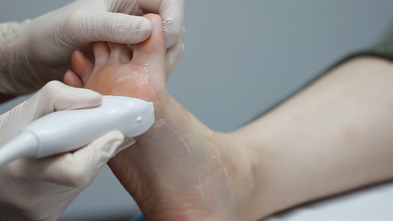
At East Coast Podiatry Singapore, we utilise advanced computer-aided design and manufacturing (CAD/CAM) processes that provide an accuracy of up to +/- 0.4mm. To ensure that the 3D image of the foot is captured perfectly, the patient will undergo three different types of 3D scans; which are heavily reliant on the podiatrist’s skill and training to capture the foot at maximum precision.

This approach is used for both adult and paediatric patients, particularly in complex cases where early intervention can help guide development and alignment.

The results will be combined with the information derived from the musculoskeletal and biomechanical assessment done by the podiatrist. This is necessary for the prescription and precise manufacturing of orthotic devices that are designed specifically to correct flat foot condition.

Leading the Way in Podiatry Care

Preventing-Ankle-Sprains
Preventing Ankle Sprains

Whether you’re active or just on your feet often, prevention helps avoid re-injury:

  • Warm up before exercise or physical activity
  • Strengthen ankle and lower limb muscles
  • Practise balance and proprioceptive exercises
  • Choose footwear with good support
  • Be cautious on uneven surfaces
  • Address recurring issues early

Get Relief from Ankle Pain at East Coast Podiatry

Nerve-related pain

Achilles tendon rupture

Peroneal-tendon

Peroneal tendon injuries

Get-Relief-icon-5

Arthritis

Get-Relief-icon-3

Posterior tibial tendon dysfunction

Get-Relief-icon-2

Gout

Get-Relief-icon-4

Tarsal tunnel syndrome (nerve compression)

Get-Relief-icon-1

Fracture

It is advised by ankle specialists and podiatrists to address your ankle pain and sprains promptly. Failure to do so can lead to irreversible deformities of the foot and ankle, and even cause disabilities that negatively affect your quality of life.

To prevent this, see a podiatrist if you have experienced multiple ankle sprains, or frequent ankle instability and weakness.

Get-Relief

Frequently Asked Questions

What is an ankle sprain?

An ankle sprain is an injury of the ligaments around the ankle due to excessive rolling or twisting. When this occurs, the ligaments are stretched beyond their normal range of motion, and in severe cases, may result in the tearing of the ligament. Ankle sprains are the most common ankle injury in Singapore.

Why do we sprain our ankle?

While ankle sprains are usually caused by a single event, such as a fall, landing awkwardly after a jump, or having someone step or land on your foot, there are often underlying causes that contribute to ankle sprains. This may include, previous ankle injury, poor footwear choices or a lack of flexibility or strength in the ankle. Previous ankle injuries are a major culprit as they weaken your ankle, hence increasing the incidence of such injuries. To avoid this from occurring, consult an ankle specialist or podiatrist to see what are the options are available for you.

What are some symptoms of ankle sprains?

You usually know when you have sprained your ankle because of the very noticeable twisting or turning motion. Other common symptoms can include:

  • Pain, particularly upon weight-bearing
  • Soreness and/or tenderness
  • Swelling
  • Bruising
  • Restricted range of motion
  • Popping sensation or sound at the time of injury

If the pain persists over a prolonged period of time, or greatly intensifies upon weight bearing, the ankle may have been fractured rather than sprained. You should always consult a podiatrist or lower limb specialist to ensure that there is no lasting damage.

Will it go away on its own?

While ankle injuries can heal on their own, they often heal incorrectly or in a manner that encourages future injury.

A severe ankle sprain may take several months to fully recover. If neglected, complications such as chronic ankle instability or even ankle arthritis may occur. Therefore, it is important to address the underlying cause of these injuries in order to implement appropriate preventive measures.

How can we manage ankle sprains?

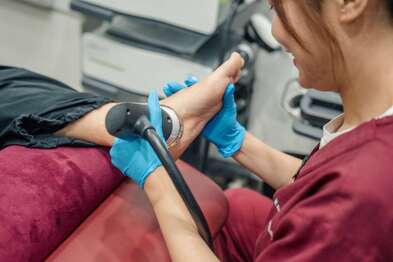
Depending on the severity and type of injury, the course of action for ankle sprains can range from applying R.I.C.E to the affected area, to using crutches or splints, to using electromagnetic stimulation to help facilitate recovery.

For both mild and severe injuries, physical therapy may be prescribed for rehabilitation purposes. Surgical intervention is rare, and is typically only offered if there is significant bone deterioration or if conservative methods have failed to stabilise the ankle joint after an extended period of therapy.

Do I need surgery for ankle sprains?

Surgery is rarely required for ankle sprains as the ligaments of the ankle can remodel themselves. Nonetheless, you should seek help from a foot specialist or podiatrist to avoid injury progression and future injury.

Media

Book an Appointment

Opening Hours

With five conveniently located clinics in Bukit Timah, Kembangan, Novena, and Orchard, we provide thorough reviews and personalised care methods to address a wide range of lower limb issues that you or your family members might face. From initial assessment to tailored care plans, we ensure that every step of your journey is handled with expertise and attention to detail.

Mon to Sat - 9am to 6pm, Sun & Public Holidays - Closed

We recommend that you schedule an appointment prior to visiting our clinics.

Orchard

302 Orchard Road
Tong Building #09-02 (Rolex Centre)
Singapore 238862
Tel: +(65) 6884 4123

Kembangan

18 Jalan Masjid
Kembangan Plaza #B1-02
Singapore 418944
Tel: +(65) 6848 5156

Novena

10 Sinaran Drive
Novena Medical Centre #08-13
Singapore 307506
Tel: +(65) 6235 2132

Bukit Timah

1 Fifth Avenue
Guthrie House #02-04
Singapore 268802
Tel: +(65) 6235 9080

Marine Parade

80 Marine Parade Rd
Parkway Parade #08-04
Singapore 449269
Tel: +(65) 6592 8082