

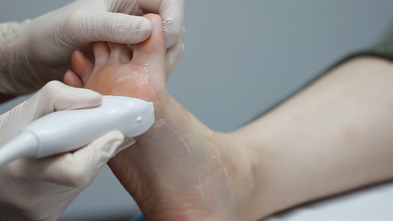


Foot Drop (or drop foot) is a term describing a debilitating condition where a person is unable to lift the forefoot off the ground. It is not a disease, but instead a sign of underlying neurological, muscular or anatomical disorder. Typically, when the leg is swinging forward, the foot is pulled up to obtain ground clearance. However, for people with foot drop, the foot droops downwards and the lack of ground clearance causes them to stumble or trip over.
We must first determine what is causing or has caused the foot drop condition. Once this is successfully identified, the condition may be managed directly. However, in some cases foot drop can be permanent if the underlying cause cannot be addressed. Foot drop can affect one or both feet.
Patients with foot drop must consciously focus on lifting their foot during gait, to reduce their risk of stumbling and falling. They are at higher risk of foot abrasions, wounds and ulcerations, especially if the patient is experiencing associated numbness. Traditionally, patients would be fitted with a rigid ankle-foot orthotic device (AFO). However, with advancements in device technology, patients now have more functional options available for walking aids. At East Coast Podiatry, most of our patients with foot drop can use specific appropriate orthotic devices to improve mobility and carry on with everyday activities.

Types of Ankle Pain
Ankle pain can come in different forms, depending on the cause and area affected. Here are common types:

Sprained ankle
Usually caused by overstretching or partial tearing of ligaments, often from twisting or rolling the ankle.

Ankle instability
A lingering sense of weakness or the ankle “giving way,” often after repeated or moderate to severe sprains.

Tendinitis
Inflammation of tendons around the ankle, such as the Achilles or peroneal tendons, leading to pain with movement.

Fractures
Breaks in one or more ankle bones, such as the fibula, causing sharp pain, swelling, and difficulty bearing weight.

Bursitis
Inflammation of the fluid-filled sacs around the ankle joint, often from repetitive motion or pressure.

Arthritis
Wear and tear (osteoarthritis) or autoimmune conditions (rheumatoid arthritis) causing stiffness and chronic.

Nerve-related pain
Such as tarsal tunnel syndrome, where nerves are compressed, leading to burning, tingling, or numbness
Causes of foot drop
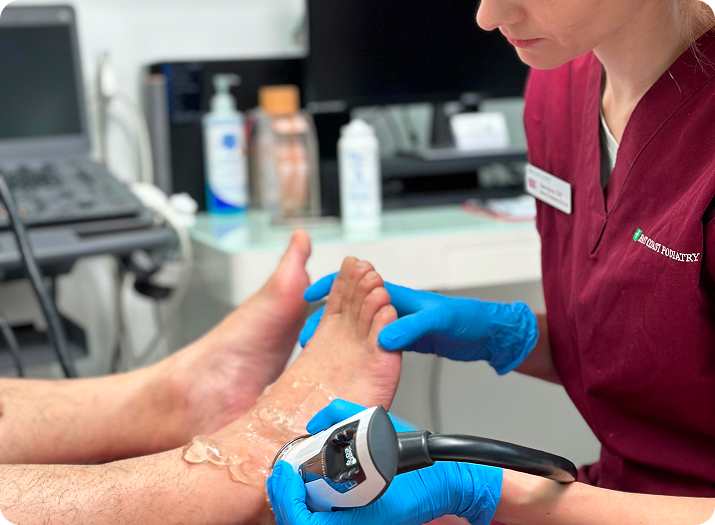
Foot drop is normally identified by a neurologist or orthopaedic doctor. Foot drop is caused by weakness or paralysis of the leg muscles involved in pulling up the forefoot and toes and causes include:
- Muscular dystrophy (inherited diseases that cause progressive muscle weakness), such as Charcot Marie Tooth, spina bifida, and cerebral palsy
- Brain and spinal cord disorders, such as amyotrophic lateral sclerosis (ALS), multiple sclerosis (MS) or stroke
- Peroneal nerve injuries in the leg
- Sciatic impingement at the hip
- Spinal nerve root impingement in the low back
- Spinal cord tumors
- Autoimmune conditions affecting the nerves, such as demyelinating polyneuropathy
- Ankle arthritis
- Nerve injury following hip or knee replacement surgery
- Diabetic peripheral neuropathy
- Prolonged leg cast immobilization
Symptoms of foot drop

Sensation of foot heaviness
.jpg?width=250&height=250&name=iStock-2083828418%20(1).jpg)
Dragging the toes on the floor
%2c%20as%20though%20climbing%20stairs%2c%20in%20order%20to%20avoid%20tripping.png?width=250&height=250&name=Raising%20up%20the%20knee%20and%20thigh%20excessively%20while%20walking%20(steppage%20gait)%2c%20as%20though%20climbing%20stairs%2c%20in%20order%20to%20avoid%20tripping.png)
Raising up the knee and thigh excessively while walking (steppage gait), as though climbing stairs, in order to avoid tripping

Involuntarily slapping the foot down on the floor with each step
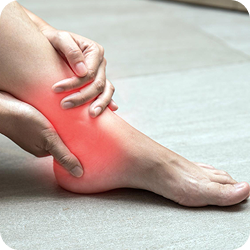
Numbness to the top of the foot, toes or lower leg
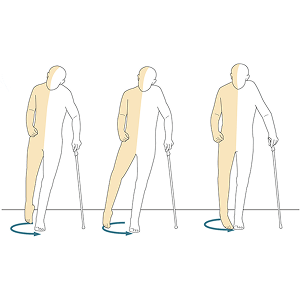
Circumduction gait pattern
Ankle Sprain Management and Prevention
Managing Sprained Ankles
A sprained ankle can range from mild to severe. Acute ankle sprains benefit from early care to reduce swelling and promote healing:
- Rest and avoid putting weight on the injured ankle
- Apply ice to manage acute inflammation in the first 48 hours
- Use compression bandages or a brace to support the area
- Elevate the ankle to reduce swelling
- Non-steroidal anti-inflammatory medication may be used to alleviate pain and inflammation
- Shockwave therapy is typically recommended when pain and swelling persist despite rest
- Return to movement with progressive exercises that restore strength and mobility
However, if the injured ankle shows signs of chronic instability or pain worsens, it is crucial to consult a podiatrist. Depending on the severity of the sprain—ranging from Grade I to Grade III sprains—management may require immobilisation or advanced care. Diagnostic imaging may be needed to rule out fractures and assess ligament or soft tissue damage.
Rehabilitation is crucial in managing sprained ankles, especially for moderate to severe sprains. A targeted exercise plan supports restoration of function and may prevent recurrence.

Leading the Way in Podiatry Care

Preventing Ankle Sprains
Whether you’re active or just on your feet often, prevention helps avoid re-injury:
- Warm up before exercise or physical activity
- Strengthen ankle and lower limb muscles
- Practise balance and proprioceptive exercises
- Choose footwear with good support
- Be cautious on uneven surfaces
- Address recurring issues early
Get Relief from Ankle Pain at East Coast Podiatry

Achilles tendon rupture

Peroneal tendon injuries

Arthritis

Posterior tibial tendon dysfunction

Gout

Tarsal tunnel syndrome (nerve compression)

Fracture
It is advised by ankle specialists and podiatrists to address your ankle pain and sprains promptly. Failure to do so can lead to irreversible deformities of the foot and ankle, and even cause disabilities that negatively affect your quality of life.
To prevent this, see a podiatrist if you have experienced multiple ankle sprains, or frequent ankle instability and weakness.