

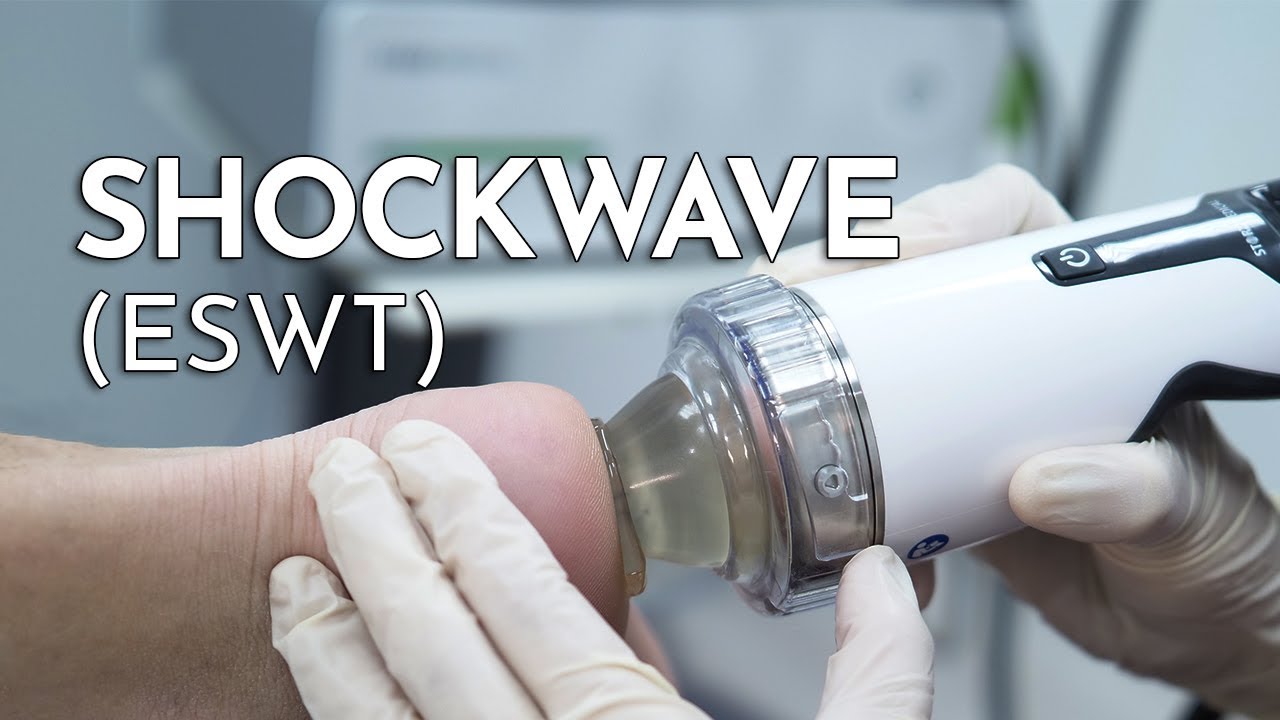
Shockwave Therapy
An in-clinic non-invasive procedure performed by a qualified health practitioner
There are 3 different types of shockwave therapy
- Radial – for large areas
- Focused – for pin-point precision
- De-focused – for complex diabetic wounds and ulcers
Each type is used by a variety of health professionals to address specific conditions.
Why should I opt for Shockwave therapy?
- No Medication
- No Injections
- Non Surgical
- Highly Effective with Very Quick Results
- Clinically Proven and Successful Worldwide
Are all shockwave therapy machines the same?
Simply put, no. The quality of the device used to generate the shockwaves can affect the results greatly. To ensure that you receive the best care, take note of the make and model of the device used and conduct online research. If the device can be purchased from online platforms, be extra cautious.
East Coast Podiatry offers Storz shockwave in all our clinics. Storz Medical is a Swiss based German manufacturer and world leader in the research and development of shockwave technology.
Find out more at: https://www.storzmedical.com/us/
Successful clinical shockwave therapy relies on
- The expertise of the specialist
- High quality shockwave device
- Timely follow up sessions and feedback from patients
What is Radial Shockwave?
Radial Shockwave Therapy (RSWT) is the most common form of shockwave therapy available. It is an efficient method for achieving pain relief in a short period of time.
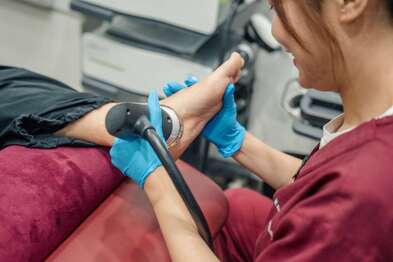
Radial shockwave is ballistically generated. meaning that it is formed from a projectile mechanically hitting a transmitter. The transmitter produces pressure waves that impact on the surface of the skin and travel downwards into the deeper tissues, offering deep tissue effects that cannot be achieved with manual massage or tools.
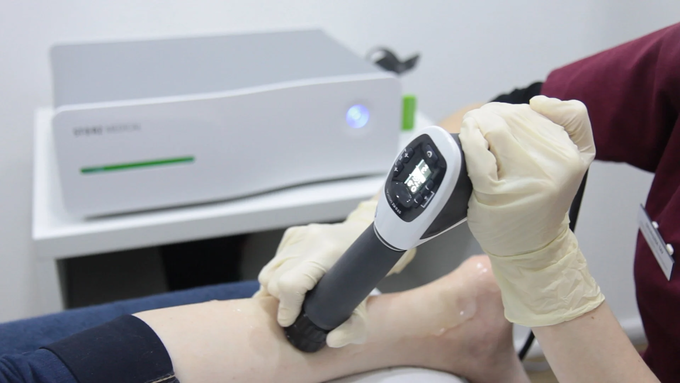
‘‘Broad pulsation targets large affected areas’’
Often used in combination with Focused Shockwave for best clinical results. Read more on radial shockwave.
Did you know?
Shockwaves are not technically shockwaves, they are actually pressure waves. As it served a similar purpose, the early pioneers decided to categorise the technology under the term ‘shockwave’ to avoid public confusion.
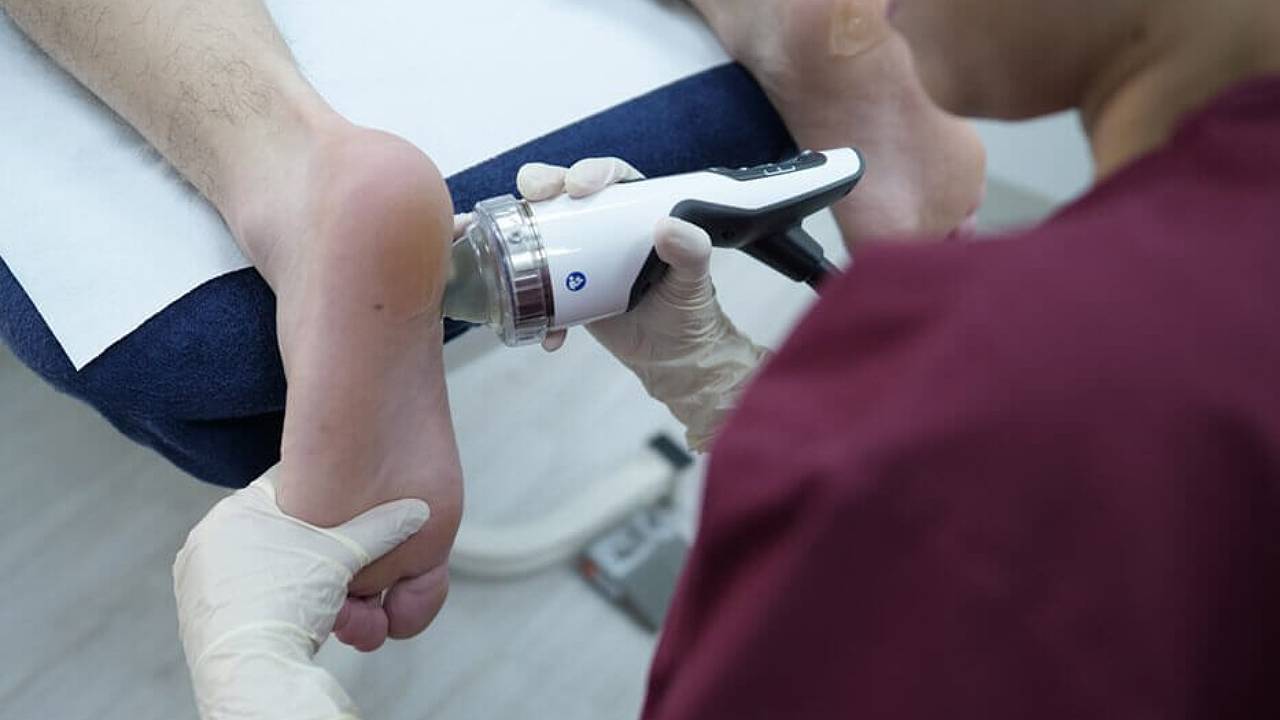
What is Focused Shockwave?
Focused shockwave is used to precisely target and penetrate deeper areas of the body. Focused Shockwave Therapy (FSWT) has a very high penetrative power and can deliver a precise beam of shockwave energy into a small area and specific part of the target tissue region. For example, focused shockwave is capable of reaching into the insertion point of a tendon or directly into the hip joint which no radial shockwave device can achieve.
‘‘Pin-point pulsation targets small affected areas’’
Often used in combination with Radial Shockwave for best clinical results. Read more on focused shockwave
Learn more on defocused shockwave, a specific type of shockwave for increasing the recovery rate of diabetic wounds.
Did you know?
Focused shockwave is also used in other medical fields for purposes such as breaking up kidney stones, addressing muscle spasticity, lateral epicondylitis, chronic pelvic pain syndrome, facial/body aesthetics, and more.
History of Shockwave
The original application of shockwave was to address kidney stones. This type of high-energy shockwave is known as ESWL or extracorporeal shockwave lithotripsy, and was done in an operating theatre setting. Researchers then found that a lower intensity shockwave was able to address various musculoskeletal conditions and to manage pain. The power used for generating this shockwave is much lower than the range used for fragmenting kidney stones.
The low intensity shockwaves used in therapy and pain management, also known as ESWT, are safe and are designed to induce healing. They have been extensively studied, and are an accepted modality in many orthopaedic practices, podiatry centres, and hospitals in Singapore and around the world.
- Heel Spur
- Sesamoiditis
- Metatarsalgia
- Bunions
- PTTD
- Plantar Nerve Neuritis
- Gout related flare ups on the foot
- Tight Calves
- Achilles Tendonitis
- Shin Splint
- Runners Knee pain
- Hip pain
- Back pain
- Tennis Elbow
- Frozen shoulder
Frequently Asked Questions
What happens after a shockwave procedure?
Patients can feel a significant difference after a session of shockwave. Walking or driving after a session is typically not a problem, but patients are advised to reduce their level of physical activity for one to two weeks.
To prevent certain conditions from worsening, proper footwear with orthotic arch support may be recommended by the podiatrist. If necessary, sports tape may also be applied to secure and support the affected area.
How many sessions are needed?
In general, an average of 3 to 5 shockwave sessions are needed. These sessions are performed at weekly intervals. However, the number of sessions needed is dependent on factors such as the severity of the symptoms, patient medical profile, and patient compliance.
Potential Complications
The main complications are pain and hypersensitivity at the targeted site. This should steadily resolve within a couple of days. Pain and disability may persist if the patient aggravates the pre-existing condition with too much physical activity right after the shockwave therapy.
Is this a substitute for surgery?
Shockwave therapy is a non-invasive approach that can help the patient achieve improvement without surgery. The response to shockwave therapy can vary based on the individual. When conservative interventions are exhausted, surgery may be what is needed.
Who should avoid this therapy?
Complications are infrequent with proper application of shockwave therapy by experienced healthcare providers.
Patients who are pregnant, taking anticoagulants or have blood clotting disorders should not undergo shockwave therapy. If you have had a corticosteroid (cortisone) injection at the site of pain in the past six weeks, please inform your podiatrist. ESWT is not advised in patients with cancer.
This list is not exhaustive. If you have any questions or concerns, please check with your physician before undergoing shockwave therapy.
Is shockwave covered by insurance?
This depends on the insurance policy. You may discuss this with our podiatrist or enquire first with your insurance provider.
Book an Appointment
Opening Hours
With five conveniently located clinics in Bukit Timah, Kembangan, Novena, and Orchard, we provide thorough reviews and personalised care methods to address a wide range of lower limb issues that you or your family members might face. From initial assessment to tailored care plans, we ensure that every step of your journey is handled with expertise and attention to detail.
Mon to Sat - 9am to 6pm, Sun & Public Holidays - Closed
We recommend that you schedule an appointment prior to visiting our clinics.
Orchard
302 Orchard Road
Tong Building #09-02 (Rolex Centre)
Singapore 238862
Tel: +(65) 6884 4123
Kembangan
18 Jalan Masjid
Kembangan Plaza #B1-02
Singapore 418944
Tel: +(65) 6848 5156
Novena
10 Sinaran Drive
Novena Medical Centre #08-13
Singapore 307506
Tel: +(65) 6235 2132
Bukit Timah
1 Fifth Avenue
Guthrie House #02-04
Singapore 268802
Tel: +(65) 6235 9080
Marine Parade
80 Marine Parade Rd
Parkway Parade #08-04
Singapore 449269
Tel: +(65) 6592 8082