


SPRAINED ANKLE TREATMENT SINGAPORE | SYMPTOMS, CAUSES AND TREATMENTS
Personalised Sprained Ankle Treatment
A sprained ankle is one of the most common foot and ankle injuries, often caused by a sudden twist, fall, or awkward landing. While many sprains may seem minor, proper assessment and personalised treatment are important for healing and restoring mobility.
What Is a Sprained Ankle?
A sprained ankle occurs when one or more ligaments (strong bands of fibrous tissue) that support the ankle joint are stretched or torn, usually after the foot twists or rolls beyond its normal range of motion.
The severity of an ankle sprain depends on the extent of ligament damage and can range from a mild overstretching to a complete tear. While ankle sprains are among the most common sports injuries, they can also occur during everyday activities such as walking on uneven surfaces, misstepping, or wearing unstable footwear. Prompt assessment and proper treatment are important for supporting healing and reducing the risk of further injury.
Types of Sprained Ankles
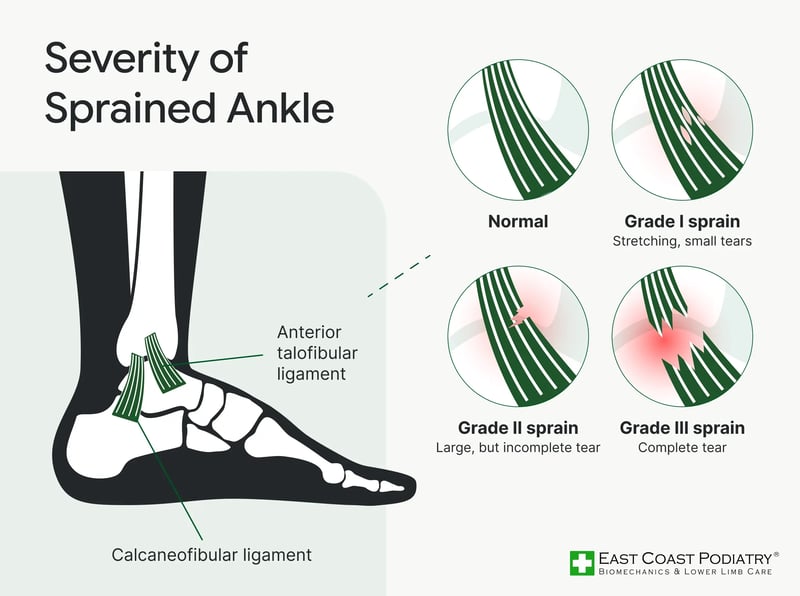
Severity of Sprained Ankle
Sprained ankles are classified into three grades based on the extent of ligament damage, helping determine the appropriate treatment and expected recovery time.
| Grade | Description |
|---|---|
| Grade I (Mild Sprain) | A Grade I sprain involves mild stretching or microscopic tearing of the ligament. It usually causes slight pain, tenderness, and swelling, but the ankle remains stable and can often still bear weight. |
| Grade II (Moderate Sprain) | A Grade II sprain is a partial tear of the ligament, resulting in more noticeable ankle pain and swelling, bruising, and reduced ankle stability. Walking may be difficult, and recovery generally takes longer than a mild sprain. |
| Grade III (Severe Sprain) | A Grade III sprain is a complete tear of the ligament, leading to significant swelling, severe pain, bruising, instability, and difficulty bearing weight. This type of injury often requires a longer rehabilitation period and, in some cases, surgical evaluation. |
Ankle Injury Location
Ankle sprains can affect different ligaments depending on how the injury occurred, with each type presenting distinct symptoms and recovery considerations.
| Location | Description |
|---|---|
| Lateral Ankle Sprain | Most ankle sprains are lateral ankle sprains, which occur during an inversion injury, when the foot rolls inward and stretches or tears the ligaments on the outside of the ankle. The anterior talofibular ligament (ATFL) is the most commonly injured ligament, followed by the calcaneofibular ligament (CFL). In more severe cases, the posterior talofibular ligament (PTFL) may also be affected. |
| Medial Ankle Sprain | A medial ankle sprain affects the deltoid ligament, a strong ligament complex located on the inside of the ankle. This type of sprain is less common because the deltoid ligament is stronger and typically requires greater force to sustain the injury. |
| High Ankle (Syndesmotic) Sprain | A high ankle sprain involves the syndesmotic ligaments, which connect the tibia and fibula above the ankle joint. It often occurs during twisting injuries and generally takes longer to heal than a typical ankle sprain. |
Causes
-
Sudden twisting or rolling of the foot: An ankle sprain commonly occurs when the foot rolls inward or outward beyond its normal range of motion, overstretching or tearing the ankle ligaments.
-
Sports and recreational activities: High-impact sports such as basketball, football, tennis, and trail running involve frequent jumping, pivoting, and rapid changes in direction that increase the likelihood of an ankle sprain.
-
Walking on uneven surfaces: Stepping on uneven ground, potholes, curbs, or loose gravel can cause the ankle to twist unexpectedly, causing pain, swelling, and injury to the ankle ligaments.
-
Missteps or falls: Missing a step on the stairs, landing awkwardly after a jump, or slipping can place excessive stress on the ankle joint and ligaments.
Risk Factors
-
Previous ankle sprains: A history of ankle sprains and torn ligaments can reduce joint stability, increasing the likelihood of recurrent sprains on the same ankle.
-
Weak ankle muscles or poor balance: Reduced muscle strength, coordination, or proprioception can make it harder to stabilise the affected foot during movement.
-
Participation in high-risk sports: Sports such as basketball, football, track and field, and any other activities that involve running, jumping, or sudden changes in direction place greater demands on the ankle ligaments.
-
Poor conditioning or fatigue: Tired muscles are less effective at supporting the ankle joint, increasing the risk of awkward movements and severe ankle sprains, especially during prolonged physical activity.
Mild Symptoms
A mild (Grade I) ankle sprain typically causes mild pain, tenderness, and minimal swelling around the injured ligament. Most people can still walk and retain near-normal ankle function, although certain movements may be uncomfortable. The ankle generally remains stable, with little or no bruising.
Moderate Symptoms
A moderate (Grade II) ankle sprain often results in more persistent pain, swelling, bruising, and other symptoms due to a partial ligament tear. Walking may be difficult, and the ankle may feel weak or unstable, particularly when bearing weight or changing direction.
Severe Symptoms
A severe (Grade III) ankle sprain occurs when a ligament is completely torn and is characterised by intense pain, significant swelling, extensive bruising, and marked ankle instability. Many people are unable to bear weight on the affected foot, and attempting to walk or move the ankle may cause more pain. The injured ankle may also feel as though it is giving way.
Prompt medical assessment is recommended to determine the extent of the injury and guide appropriate treatment.
Experiencing These Symptoms?
How Are Sprained Ankles Diagnosed?
The diagnosis of a sprained ankle typically begins with a clinical assessment conducted by a podiatrist or healthcare professional. During the assessment, the specialist will evaluate the severity of the injury by understanding how the ankle was injured, identifying symptoms, and examining the affected area.
This helps determine which ligaments may be affected and whether additional tests are needed to rule out fractures or other underlying conditions.
Medical History
Your podiatrist will ask about how the injury occurred, the symptoms you are experiencing, and any previous ankle injuries.
Physical Examination
A physical exam involves assessing the ankle for swelling, bruising, tenderness, range of motion, and areas of pain.
Specialised Stress Tests
Specialised stress tests may be performed by gently applying pressure or movement to the ankle joint.
Imaging Tests (If Required)
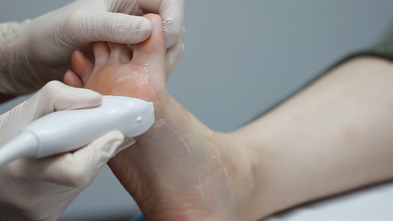
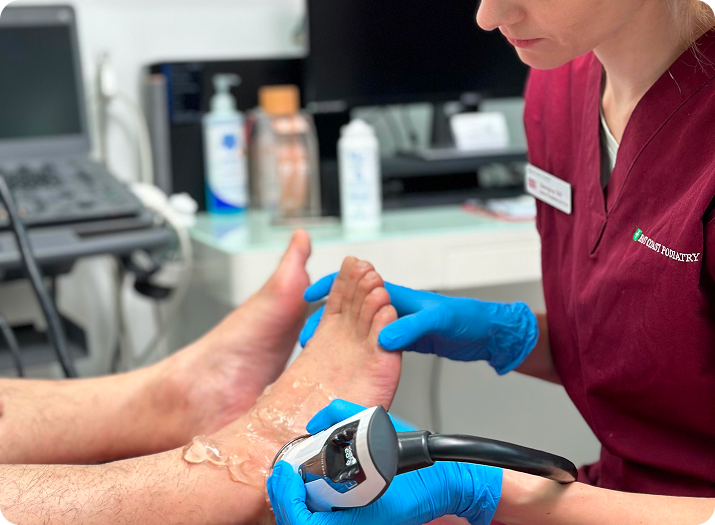
If more serious injuries are suspected, imaging tests such as X-rays, ultrasound scans, or MRI scans may be recommended.
When Should You Seek a Podiatrist for Sprained Ankle?
While mild ankle sprains may improve with rest and self-care, you should seek medical attention if you experience severe swelling, significant pain with weight-bearing, difficulty walking, limited ankle movement, repeated ankle sprains, or symptoms that do not improve after a few days of home care.
Early assessment allows your podiatrist to identify severe injuries and develop a personalised management plan, including rehabilitation exercises to reduce pain and support the healing process.
Personalised Sprained Ankle Treatment Options

Super Inductive System (SIS)
Super Inductive System (SIS) is a non-invasive therapy that uses electromagnetic fields to stimulate tissues, helping support pain relief, muscle activation, and recovery in suitable cases. It may be used as part of a broader rehabilitation plan to assist with restoring movement and improving function after injury.

Shockwave Therapy
Shockwave therapy uses acoustic waves to target affected tissues, promoting healing by stimulating blood flow and supporting the body’s natural recovery process. It may help manage persistent pain or soft-tissue injuries, particularly when symptoms do not improve with conventional treatments.

Orthotics
Custom orthotics may be recommended to improve foot alignment, support the ankle, and correct biomechanical issues that contribute to pain or repeated injuries. By improving how pressure is distributed during movement, orthotics can help enhance foot function, provide additional support, and reduce strain on the ankle.

Biomechanical correction
Biomechanical correction focuses on identifying and addressing movement patterns, foot function, and alignment issues that may contribute to ankle instability or recurring sprains. Treatment may involve a combination of rehabilitation exercises, footwear advice, and supportive measures to improve overall lower-limb function.
Conservative Treatment Options
Conservative treatment focuses on relieving pain, protecting the injured ankle, and promoting recovery without surgery. It helps reduce swelling and discomfort, while rehabilitation exercises can be introduced as pain improves to restore strength and stability.

Pain Management
For many common injuries, pain management may be recommended to relieve discomfort and support recovery. This includes modifying everyday activities, using an ice pack, taking over-the-counter pain relievers, and keeping your ankle elevated to reduce swelling.
Depending on the severity and stage of recovery, your podiatrist may also recommend additional therapies where clinically appropriate.

Sports Taping
Sports taping provides additional support by limiting excessive ankle movement while allowing functional mobility. It may be recommended during recovery or when returning to physical activity to reduce the risk of re-injury.
Ankle Bracing and Support
Ankle braces or supportive devices help stabilise the joint, reduce strain on the injured ligaments, and protect the ankle during the healing process, particularly when returning to daily activities or sports.
Rehabilitation and Physical Therapy
A personalised rehabilitation programme, guided by a podiatrist or physical therapist where appropriate, may include strengthening, balance, range of motion, and proprioception exercises. These exercises help restore ankle function, improve stability, and reduce the risk of future sprains.
What Our Patients Say
Hear From Patients Treated for Sprained Ankles
Ummairah is very good, she will check my feeling when she do the shock wave therapy. I love the sensation feeling. when she put on ankle, the more sensation feeling , the more blood circulation, the higher the recovery rate for me . When the sensation feeling subsided, I let Ummairah know and she will search for the weaker / targeted area and the cycle come again . This way , the healing is faster for me
2 reviews · July 2026
I had a great experience with East Coast Podiatry kembangan. I came in with an ankle injury and was really impressed by the level of care and professionalism throughout my treatment. The team took the time to properly assess my condition, explain everything clearly, and make sure I was comfortable every step of the way.
A big thank you to the staff for being so attentive, friendly, and supportive. They made what could have been a stressful situation much easier to handle. I truly appreciate the care I received and would highly recommend them to anyone dealing with foot or ankle issues.
4 reviews · May 2026
I sprained my ankle and initially thought it wasn't serious, but after a scan, I learned there was some tissue tearing that could lead to ongoing pain if not treated properly. I started working with Ms. Peggy, a specialist who is incredibly nice and supportive. She provided effective treatment and strength training during each session, which ultimately helped me heal. The clinic is clean and well-equipped with plenty of treatment tools. I highly recommend this place!
4 reviews · Jun 2025
I was attended by Podiatrist Ms Gayatri Ramesh when I visited the the clinic for my severe ankle inflammation and also gout condition. She conducted a diagnostic of my condition and I did a 6-session treatment to address my condition. My condition greatly improved and I recovered fully after the treatment. Ms Gayatri is a very warm person who keep her patients engaged throughout the treatment sessions. Kudos to her. It's a blessing for patients attended by her.
8 reviews · Jun 2025
I had a great experience with Dr. Lai, who treated my ankle with shockwave therapy. He was professional and patient, explaining the process clearly and ensuring I was comfortable throughout. He also gave helpful advice on post-treatment care and how to prevent future injuries. I really appreciate his thoroughness and care — highly recommended!
8 reviews · Oct 2025
My first consult was done by miss maria and Jon at Orchard east coast podiatry it was a wonderful experience with them. At 1st I didn't believe that my pain can be cured after the next next session i got relive from my ankle pain.Miss maria and Jon was very polite and kind ☺️
2 reviews · Jan 2026
Found this clinic while dealing with a lingering ankle sprain. Dr. Maria was patient and thorough in her explanation. After a few sessions of shockwave therapy, I'm finally pain-free.
April 2026
Recovery Timeline for a Sprained Ankle
Depending on the severity of the injury and how many ligaments are affected, recovery times can vary, with mild sprains often improving within weeks, while more severe sprains may require longer rehabilitation.
Phase 1: Initial Recovery (0–7 days)
The focus during the initial recovery phase is to protect the injured ankle, reduce pain and swelling, and allow the ligaments time to begin healing. Rest, ice, compression, elevation (RICE), and supportive measures such as bracing may be recommended.
Phase 2: Restoring Range of Motion (1–3 weeks)
As pain and swelling improve, gentle mobility exercises can be introduced to restore ankle movement and prevent stiffness. Gradual activity progression helps prepare the ankle for strengthening and rehabilitation.
Phase 3: Building Strength and Stability (3–6 weeks)
Strengthening and proprioception exercises help improve ankle stability, balance, and coordination. This phase aims to restore function and reduce the risk of recurring sprains.
Phase 4: Returning to Daily Activities and Sport (6–12+ weeks)
The final phase focuses on safely returning to normal activities and sports through progressive loading, functional exercises, and sport-specific training. Recovery timelines vary depending on injury severity and individual healing progress.
Receive a Personalised Treatment Plan
Complications if a Sprained Ankle Is Left Untreated
While many mild (Grade I) ankle sprains recover with appropriate self-care, more severe sprains or injuries that are not properly assessed and rehabilitated can lead to ongoing problems. Returning to sports or daily activities too soon, or failing to restore the ankle's strength and stability, increases the risk of recurrent sprains and chronic ankle instability. This can make the ankle feel weak, prone to "giving way", or painful during physical activity.
In some cases, what appears to be a simple ankle sprain may actually involve a broken bone, tendon injury, or cartilage damage that requires different treatment. Delaying assessment can prolong recovery and, over time, contribute to persistent pain, stiffness, reduced mobility, or early joint degeneration.
If pain is severe, weight-bearing is difficult, or symptoms do not improve within a few days, it is advisable to seek a professional evaluation to determine the extent of the injury.
Management & Prevention of a Sprained Ankle
Management Methods
- Follow the RICE principle in the early stages: RICE stands for Rest, Ice, Compression, and Elevation, which can help reduce pain and swelling during the first 48 hours after the injury.
- Gradually restore strength and mobility: Once pain and swelling begin to improve, gentle range-of-motion exercises, strengthening exercises, and balance training can help restore ankle function and reduce stiffness.
- Seek professional assessment and treatment: A podiatrist can assess the severity of the sprain, determine whether imaging is required to rule out fractures or more serious ligament injuries, and develop a personalised treatment plan.
Preventive Care
- Strengthen the muscles around the ankle: Regular strengthening and balance exercises improve ankle stability and coordination, helping to reduce the likelihood of future sprains.
- Wear appropriate footwear: Supportive shoes that fit well and are suitable for your activity provide better stability and reduce unnecessary strain on the ankle. Worn-out or poorly fitting footwear can increase the risk of injury.
- Warm up before physical activity: Performing a proper warm-up and dynamic stretching routine prepares the muscles and joints for movement, reducing the risk of sudden twists or awkward landings.
- Address recurring ankle instability: Individuals who have experienced previous ankle sprains may benefit from ongoing rehabilitation, ankle braces or taping during sports, and regular assessments to address lingering weakness or instability before it leads to another injury.
Book an Appointment
FAQ: Sprained Ankle Treatment
How can I tell whether I have a sprained ankle or an ankle fracture?
Both injuries can cause pain, swelling, bruising, and difficulty walking. However, a fracture is more likely if you have severe pain, an obvious deformity, or cannot bear weight. Because the symptoms often overlap, a podiatrist may recommend an examination and imaging, such as an X-ray, to confirm the diagnosis.
Can a sprained ankle heal on its own?
Mild ankle sprains often heal with rest and self-care. However, if your sprain is severe, you may be referred to a doctor who specialises in orthopedic surgery or sports medicine to receive personalised treatment, reducing the risk of ongoing pain or ankle instability.
Can a sprained ankle return after treatment?
Yes. Without proper rehabilitation, the ankle may remain weak or unstable, increasing the risk of another sprain. Strengthening exercises, balance training, and supportive bracing or taping can help reduce recurrence.
How can a podiatrist help me with an ankle sprain?
A podiatrist can assess the severity of your ankle sprain, identify the structures affected and determine whether further investigation or imaging may be needed. They can also assess your ankle movement, strength, stability, balance and foot biomechanics to understand what may be contributing to your symptoms.
Depending on your injury and stage of recovery, your podiatrist may recommend a personalised plan that can include rehabilitation exercises, ankle support or bracing, sports taping, footwear advice, orthotics or other therapies to help restore function and reduce the risk of recurring sprains.
How do ankle ligament injuries affect the ankle joint?
Ankle ligaments help keep the joint stable. When they are stretched or torn, the ankle may become painful, swollen, and unstable. If left untreated, ligament injuries can lead to recurring sprains or chronic ankle instability.
Will I need surgery for a sprained ankle?
Most sprained ankles can be treated without surgery using rest, bracing, and rehabilitation exercises. Surgery is usually only considered for severe ligament injuries or ongoing ankle instability that does not improve with conservative treatment.
What should I know before starting sprained ankle treatment?
An accurate diagnosis is important to determine the severity of the injury and rule out fractures. Following your treatment plan and allowing enough time for recovery can help prevent further injury.
What is the recovery time following sprained ankle treatment?
Recovery depends on the severity of the sprain. Mild injuries may recover within a few weeks, while more severe ligament injuries can take several months. Your podiatrist will advise when it is safe to return to normal activities.
How many sprained ankle treatment sessions will I need?
The number of sessions varies depending on the severity of your injury and your recovery progress. Mild sprains may only require one or two visits, while more severe injuries often benefit from ongoing rehabilitation.
What is the difference between sports taping and ankle bracing?
Sports taping provides customised support but may loosen during activity. Ankle braces offer consistent, reusable support and are often easier to wear. Your podiatrist can recommend the most suitable option based on your condition and activity level.
Our Podiatrist Team
Meet Your Podiatrist
Experienced And Internationally Trained Podiatrists Ready To Provide The Best Care For You

Your Journey to Recovery
Your Sprained Ankle Treatment Journey
Book an Appointment
Schedule a consultation with our podiatrist.
Assessment & Diagnosis
We'll assess your condition and recommend further investigations if needed.
Personalised Treatment
Receive a tailored treatment plan to support healing.
Recovery & Prevention
We'll support your recovery and provide guidance to help prevent future issues.
Insurance Partners and Direct Billing
We work with a range of insurance providers and offer direct billing where applicable for a smoother healthcare experience.

Find An East Coast Podiatry Clinic Near You
With five conveniently located clinics in Bukit Timah, Kembangan, Novena, and Orchard & Marine Parade, we provide thorough assessments and personalised care methods to address a wide range of lower limb issues that you or your family members might face. From initial assessment to tailored care plans, we ensure that every step of your journey is handled with expertise and attention to detail.
| Clinic Location | Operating Hours |
| Bukit Timah, Kembangan, Marine Parade, Novena | Mon to Sat - 9am to 6pm, Sun & Public Holidays - Closed |
| Orchard | Mon to Sun - 9am to 6pm, Public Holidays - Closed |
We recommend that you schedule an appointment prior to visiting our clinics.
Orchard
302 Orchard Road
Tong Building #09-02 (Rolex Centre)
Singapore 238862
Tel: +(65) 6884 4123
Kembangan
18 Jalan Masjid
Kembangan Plaza #B1-02
Singapore 418944
Tel: +(65) 6848 5156
Novena
10 Sinaran Drive
Novena Medical Centre #08-13
Singapore 307506
Tel: +(65) 6235 2132
Bukit Timah
1 Fifth Avenue
Guthrie House #02-04
Singapore 268802
Tel: +(65) 6235 9080
Marine Parade
80 Marine Parade Rd
Parkway Parade #08-04
Singapore 449269
Tel: +(65) 6592 8082