


Wednesday, 17 December 2025
.jpg)
Foot discomfort is often accepted as a normal part of growing older. And in Singapore, many adults often associate aching, balance changes, or slower walking with ageing itself. Family members may also assume these changes are inevitable, encouraging rest rather than assessment. However, ageing feet does not automatically lead to pain. In many cases, difficulties arise when these changes are not identified or managed in time.
What actually changes as we age
With age, several natural changes occur:
- Reduced muscle strength (Sarcopenia)
- Decreased joint mobility
- Slower tissue recovery
- Changes in skin and circulation
These changes do not necessarily result in pain and ageing feet. Challenges can develop when everyday movement places demands on the body that exceed its current capacity. When this gap is not addressed, compensatory patterns are formed.
Why does pain often appear later
Older adults often present with foot pain only after:
- Balance has declined
- Walking speed has reduced
- Confidence in movement has been lost
By this stage, multiple systems may be involved. Pain is the final signal, not the first.
Earlier signs often include:
- Fatigue after short walks
- Reduced tolerance for standing
- Hesitation on uneven surfaces
These ageing feet and aching signals deserve attention.
Foot health and fall risk
Foot and ankle function contributes to balance. Reduced strength or sensation can increase the risk of falls, which is a concern for older adults
Proactive foot care supports:
- Better ground contact awareness
- Improved stability
- Faster corrective responses
Preventing falls starts at the ageing feet.
Why rest isn’t the solution
While rest can reduce discomfort temporarily, it doesn’t restore function. In fact, excess rest often accelerates decline.
Without regular, supported movement:
- Muscles weaken further
- Joint stiffness increases
- Confidence erodes
Rather than stopping movement altogether, the focus is often on maintaining appropriate and supported movement.
.jpg?width=2560&height=1434&name=ECPCDL10-1-scaled%20(1).jpg)
The role of Podiatry in Ageing
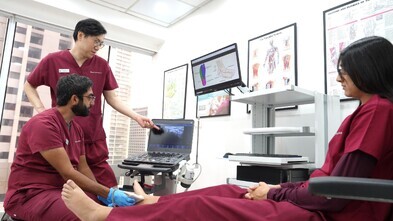
Podiatry care for older adults often focuses on maintaining function alongside managing symptoms.
This may involve:
- Assessing walking mechanics
- Improving joint mobility
- Strengthening key muscle groups
- Advising on appropriate footwear
- Reducing pressure points
These strategies help older adults maintain independence and quality of life.
Age is not a diagnosis
Pain should not be dismissed solely based on age. Many foot‑related conditions can be addressed when identified early. Ageing feet may change over time, but ongoing attention and care can help manage these changes.