

Friday, 24 April 2026

Flat feet are one of the most common foot concerns parents notice in their children. In many cases, they are completely normal and part of healthy development. However, there are situations where flat feet may be associated with pain, functional issues, or underlying structural problems that require attention from a podiatrist.
This article will help you understand what flat feet are, when they are normal, and when you should consider seeking professional advice.
What Are Flat Feet In Children?
Flat feet (also known as pes planus) refer to a condition where the arches of the foot appear low or absent. In children, this is often due to the presence of a flexible arch that becomes visible only when the child is standing on tiptoes or when the foot is not bearing weight.
It is important to understand that most young children naturally have flat feet because the arch is still developing. The arch typically forms gradually during early childhood and becomes more defined as the muscles, tendons, and ligaments strengthen.
Are Flat Feet Normal in Children?
In most cases, yes.
Flexible flat feet are considered a normal variation of foot development in young children. Many children outgrow flat feet without any treatment as they grow older.
Flat feet are generally not a concern if:
-
The child has no pain or discomfort
-
The child is able to run, walk, and play normally
-
There is no stiffness in the foot or ankle
-
The condition appears on both feet equally
When Should Parents Be Concerned?
While flat feet are often harmless, there are certain signs that may indicate a problem that requires assessment.
1. Pain in the feet, ankles, or legs
Children should not regularly complain of foot pain. Pain during walking, running, or sports may indicate that the flat feet are placing excessive strain on the soft tissues.
2. Tiring easily or avoiding activity
If your child avoids physical activity, gets tired very quickly, or prefers sitting during play, it may be a sign that foot mechanics are affecting endurance.
3. Uneven wear on shoes
Excessive wear on the inside of the shoes may suggest abnormal foot loading patterns. For example, noticing the inner edge (near the big toe side) being significantly more worn down than the outer edge, or the sole itself may look "tilted" or slanted inwards or outwards.
4. Walking abnormalities
Look for signs such as excessive inward rolling of the feet (overpronation), an awkward or clumsy walking pattern, walking on toes, or frequent tripping and poor balance.
5. One foot is flatter than the other
Significant asymmetry between feet should be evaluated, as most flexible flat feet are symmetrical.
6. Stiff flat feet
If the arch does not appear at all even when the child is on tiptoes, or the foot feels rigid, this may indicate a structural issue rather than a flexible flat foot.
How Are Flat Feet Diagnosed?
A podiatrist will typically assess for:
1. Foot posture and alignment
This involves examining how the foot sits when standing, including the arch height and whether the foot rolls inward excessively.
2. Gait (walking pattern)
Your child’s walking and running patterns are observed to identify issues such as overpronation, in-toeing, or poor coordination.
3. Flexibility of the foot
The podiatrist checks whether the arch forms when the foot is not bearing weight or when standing on tiptoes, helping to distinguish between flexible and rigid flat feet.
4. Muscle strength and joint function
The strength and range of motion of the foot, ankle, and lower limb are assessed to identify any weakness, stiffness, or imbalance.
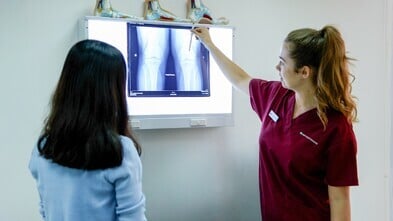
In some cases, imaging such as X-rays may be recommended if a structural abnormality is suspected.
Do Flat Feet Need Treatment?
Not all flat feet require treatment.
Most flexible flat feet improve naturally and only require monitoring.
If symptoms are present, treatment may include:
- Custom or prefabricated orthotics, customised insoles
- Foot strengthening and stretching exercises
- Footwear recommendations
- Activity modification where necessary
The aim is to improve comfort and function rather than artificially create an arch.
When Should You See a Podiatrist?
You should consider a professional assessment if:
-
Your child has persistent pain or fatigue
-
There are noticeable walking or posture concerns
-
You observe associated conditions such as toe-walking or in-toeing
-
You are unsure whether your child’s flat feet are developing normally
Early assessment can help identify whether the flat feet are part of normal development or linked to other children’s postural issues.
Need an Assessment?
At East Coast Podiatry, we provide comprehensive assessments for children with flat feet and other developmental concerns. Our team evaluates foot posture, gait, and overall biomechanics to determine whether intervention is needed.
If you have concerns about your child’s foot development, early assessment can provide clarity, reassurance and guide to appropriate care.