

Tuesday, 02 June 2026
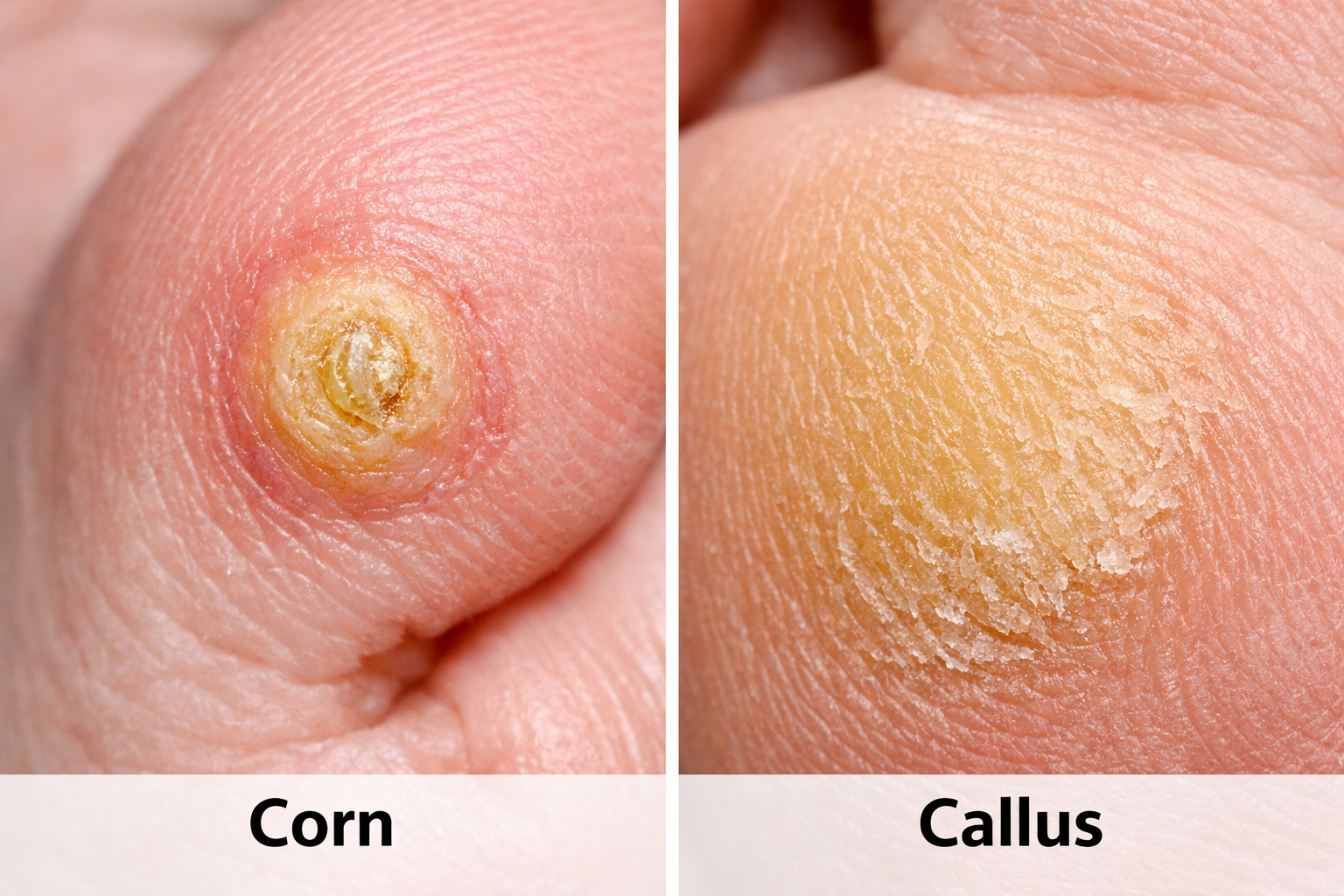
Most people assume corns and calluses are basically the same thing.
After all, both involve thickened skin. Both can appear on the feet. Both can become painful. And both tend to trigger the exact same response:
“I’ll just scrub it off.”
Unfortunately, that approach is often why these problems keep coming back.
While corns and calluses may look similar at first glance, they are actually different conditions with different causes, pain patterns, and treatment approaches. Misidentifying one for the other can lead to ineffective treatment, recurring discomfort, and in some cases, worsening foot pain over time.
Understanding the difference matters, especially if you are dealing with persistent pressure points, painful walking, or recurring thickened skin on your feet.
What Is a Corn?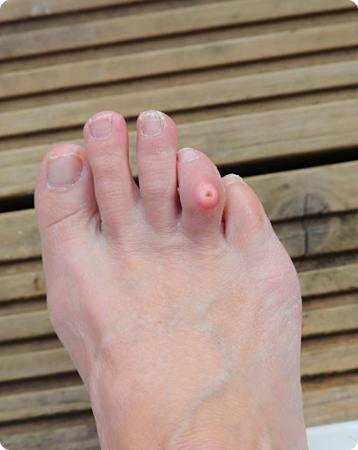
A corn is a small, concentrated area of hardened skin that develops in response to excessive pressure or friction.
Unlike a broader callus, a corn usually has:
- a dense central core
- a more circular shape
- sharper, more localised pain
Corns commonly develop:
- on the tops of toes
- between toes
- on pressure points of the forefoot
They are often associated with:
- tight footwear
- toe deformities
- prominent joints
- abnormal walking mechanics
Many patients describe corns as:
“Feeling like I’m walking on a small stone.”
That description is surprisingly accurate.
Because corns develop a hardened central core that presses into deeper tissues, they tend to produce sharper discomfort than calluses.
For more information about corns and their causes, visit the corn treatment page on East Coast Podiatry.
What Is a Callus?
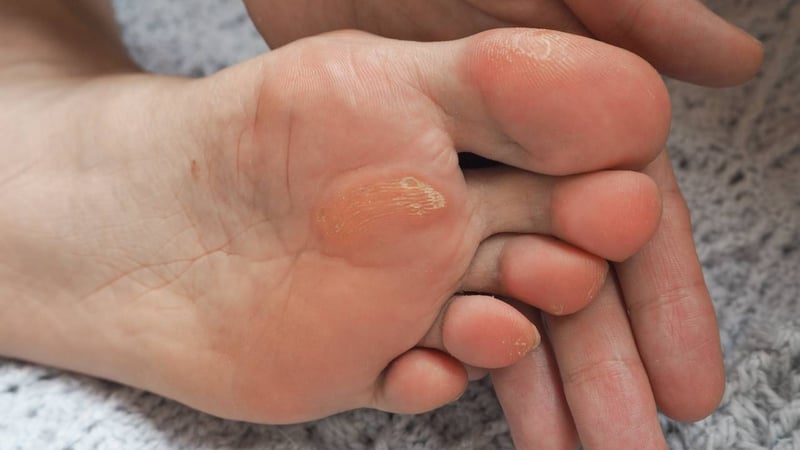
A callus is a broader area of thickened skin caused by repeated pressure, friction, or weight-bearing stress. Unlike corns, calluses are:
- larger
- flatter
- more diffuse
- usually less painful initially
Calluses commonly develop:
- under the ball of the feet
- on the heels
- along weight-bearing regions
They are especially common in people with:
- flat feet
- abnormal gait patterns
- barefoot walking habits
- unsupportive footwear
Calluses form because the skin is trying to protect itself against excessive mechanical load.
In other words:
Your skin is basically saying, “I need armour here.”
While mild calluses are not always problematic, excessive callus formation may indicate underlying biomechanical dysfunction that should not be ignored.
Learn more about callus treatment and management at East Coast Podiatry’s callus page.
Corn vs Callus: How to Tell the Difference
| Condition | Usually Found | Appearance | Pain Pattern |
| Corn |
|
|
|
| Callus |
|
|
|
Why Do Corns and Calluses Keep Coming Back?
One of the most frustrating aspects of corns and calluses is recurrence.
Many people file them down, use over the counter acid plasters, soak their feet, scrub aggressively, only for the problem to return weeks later.
That is because the thickened skin is usually not the root of the problem. The real issue is often:
- abnormal pressure
- poor biomechanics
- foot deformities
- gait abnormalities
- unsuitable footwear
Until those mechanical factors are addressed, the skin continues rebuilding itself defensively.
Think of it like repeatedly repainting a wall without fixing the leaking pipe behind it.
Flat Feet, Gait Problems and Pressure Build-Up
One major cause of recurrent calluses is abnormal foot biomechanics.
For example, people with flat feet often experience excessive pressure under certain regions of the foot due to overpronation.
This altered loading pattern may contribute to:
- forefoot calluses
- heel calluses
- pressure-related pain
- corns over prominent joints
Similarly, toe deformities such as bunions or hammer toes can create concentrated pressure points that lead to corn formation.
You can learn more about related biomechanical conditions here:
How Podiatrists Diagnose the Underlying Cause
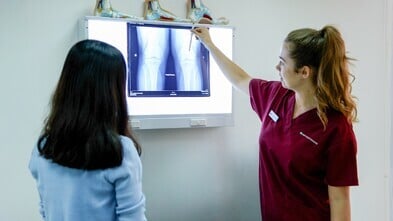
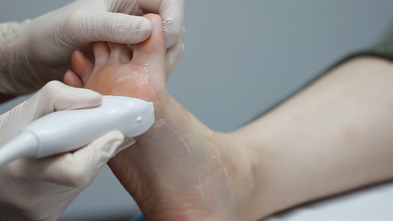
At East Coast Podiatry, assessment goes beyond simply shaving down thickened skin.
A proper evaluation may include:
- gait analysis
- pressure assessment
- footwear evaluation
- biomechanical examination
- identification of deformities or abnormal loading
This helps identify why the corn or callus developed in the first place.
Without addressing the mechanical driver, recurrence is extremely common.
You can learn more about biomechanical assessments and related conditions by contacting us.
Treatment Options for Corns and Calluses
Treatment depends on:
- severity
- location
- pain level
- underlying biomechanics
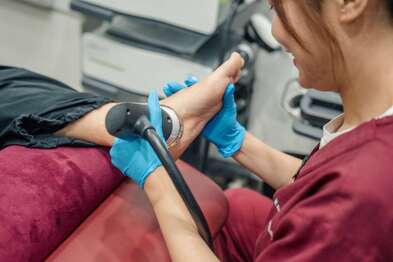
Professional management may include:
Debridement
Careful removal of thickened skin to reduce pressure and discomfort.
Footwear Modification
Reducing friction and improving pressure distribution.
Orthotics
Custom orthotics may help redistribute abnormal loading forces and reduce recurrence.
Padding and Offloading
Protective padding may reduce localised pressure.
Managing Underlying Deformities
Conditions such as bunions, flat feet, or hammer toes may need to be addressed as part of long-term treatment.
The Importance of Proper Footwear
One major contributor to both corns and calluses is footwear that does not match foot shape properly.
Common culprits include:
- narrow toe boxes
- thin-soled footwear
- unsupportive flats
- high heels
- poorly fitted sports shoes
Shoes should provide:
- adequate width
- cushioning
- support
- stable pressure distribution
Remember:
Comfort and support are not always the same thing.
The Bottom Line
Corns and calluses may seem minor initially, but they are often signs of repeated pressure, friction, or abnormal biomechanics.
The key difference is:
- corns tend to be smaller, deeper, and more painful
- calluses tend to be broader and pressure-related
Most importantly:
Simply removing the hardened skin does not solve the reason it formed.
Long-term relief usually requires identifying and addressing the underlying mechanical cause — whether that is footwear, gait abnormalities, flat feet, toe deformities, or pressure imbalance.
Your skin adapts for a reason.
The goal is not just to remove the thickened skin, but to understand why your foot felt the need to create it in the first place.