




Thursday, 07 May 2026

Fungal toenails are one of the most common nail conditions affecting people of all ages. Although they usually start small and painless, they can gradually worsen over time if left untreated. In this guide, we’ll walk you through what fungal toenails are, how to recognise them, why they develop, and the treatment options available.
Understanding the condition early can help prevent it from spreading and improve long-term nail health.
What Are Fungal Toenails/Nail Fungus? .png?width=357&height=304&name=Fungal%20Toenail%20Illustration%20(cropped).png)
Fungal toenails/Nail Fungus (medically known as onychomycosis) are infections caused by fungi that invade the nail plate and nail bed. These organisms thrive in warm, moist environments and slowly feed on the keratin in your nails.
Over time, the infection causes visible changes in the nail’s appearance and structure, often making it thicker, discoloured, and brittle.
What It Looks Like (Early vs Advanced)
Fungal toenails usually develop gradually, and the appearance changes over time.
Early stage:
- Small white or yellow spots on the nail
- Mild discolouration
- Slight dullness compared to surrounding nails
Moderate stage:
- Noticeable yellow, brown, or white staining
- Thickened nail texture While some find significant pain relief, others may experience new discomfort
- Brittle or rough edges
Advanced stage:
- Significant thickening of the nail
- Crumbling or breaking of the nail edge
- Nail lifting from the nail bed
- Strong discolouration across most of the nail
Recognising these stages early can make treatment more effective.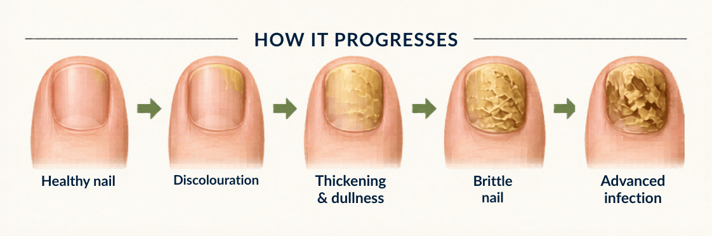
How People Actually Get It
Fungal toenails are primarily caused by fungi that thrive in warm, damp environments. These organisms sneak in through small cracks or openings in the nail and can spread through direct contact. This can happen in everyday situations, often without people realising.
Common causes usually have ideal conditions for fungal growth, these include:
- Walking barefoot in shared wet areas such as gyms, pools, or showers
- Wearing tight, non-breathable shoes for long hours
- Poor foot hygiene, unwashed shoes
- Nail injuries (such as stubbing or repeated pressure)
- Existing athlete’s foot spreading to the toenails
- Natural changes in nail growth and circulation with age
Who Is Most At Risk
Everyone is at risk of fungal toenails since the fungi spreads from direct contact. However certain groups are more likely to develop fungal toenails:
- Older adults
- Athletes or regular gym users
- People with diabetes or poor circulation
- Individuals who wear closed shoes for long periods daily
- Those with a history of nail trauma or athlete’s foot
How contagious it is?
Fungal toenails can spread, but not as easily as common infections like colds or flu.
Transmission usually requires prolonged exposure to contaminated surfaces or direct contact with infected material, such as shared shoes, socks, or nail tools. Warm, moist environments also increase the risk of spread.
Treatment Options

Treatment depends on how severe the infection is.
Home remedies
Tea tree oils, vinegar foot soaks, baking soda paste, crushed garlic and even Vicks VapoRub are some of the most common remedies we hear our patients use. They may help support nail hygiene but are generally not strong enough to fully eliminate an established infection.
Topical treatments
Topical treatments are also a popular solution for most of our patients. These includes treatments applied directly to the nail such as medicated creams/ointments, nail lacquers, urea creams and antiseptic solutions. While these are generally more successful than home remedies, they are generally used for mild infections and require consistent application over a long period.
Oral medications
These are prescription antifungal tablets that work from within the body. They are often more effective but require medical supervision due to possible side effects and treatment usually lasts 6 to 12 weeks.
Clinical treatments
Most clinics offer laser therapy, such as Photodynamic Anti-mycotic (fungal) therapy (PACT) aimed at targeting fungal cells. Laser treatment is considered a highly effective, safe, and non-invasive option for nail fungus, boasting success rates of 70%–90%.
How Long Does It Take to Clear?
Fungal toenails take time to improve because toenails grow slowly.
Even after the fungus is treated, the damaged nail must gradually grow out and be replaced by a healthy one. This process often takes several months, and in some cases longer depending on severity.
Consistency in treatment is key to seeing results.
Can it come back?
Yes, fungal toenails can return even after successful treatment. Reinfection is often caused by lingering fungi in shoes or repeated exposure to moist environments. Preventive habits also play an important role in reducing recurrence.
Helpful prevention steps include:
- Keeping feet clean and dry
- Changing socks daily
- Disinfecting or rotating shoes
- Avoiding barefoot walking in public wet are
When To See A Doctor
While mild cases of fungal toenails may seem manageable at first, there are situations where professional assessment becomes important to prevent the infection from worsening or becoming harder to treat.
It is advisable to seek medical advice if:
- The nail becomes painful or increasingly thick
- Discolouration or damage continues to spread
- There is no improvement after self-treatment
- You have diabetes or a weakened immune system
Early diagnosis and treatment generally lead to better outcomes, shorter recovery times, and a reduced risk of the infection becoming more persistent or difficult to manage.
At East Coast Podiatry, we utilise scientifically proven methods of analysis combined with thorough examination and personalised care of each patient to better address the root problems causing the issues instead of just symptom relief.