




Tuesday, 16 June 2026
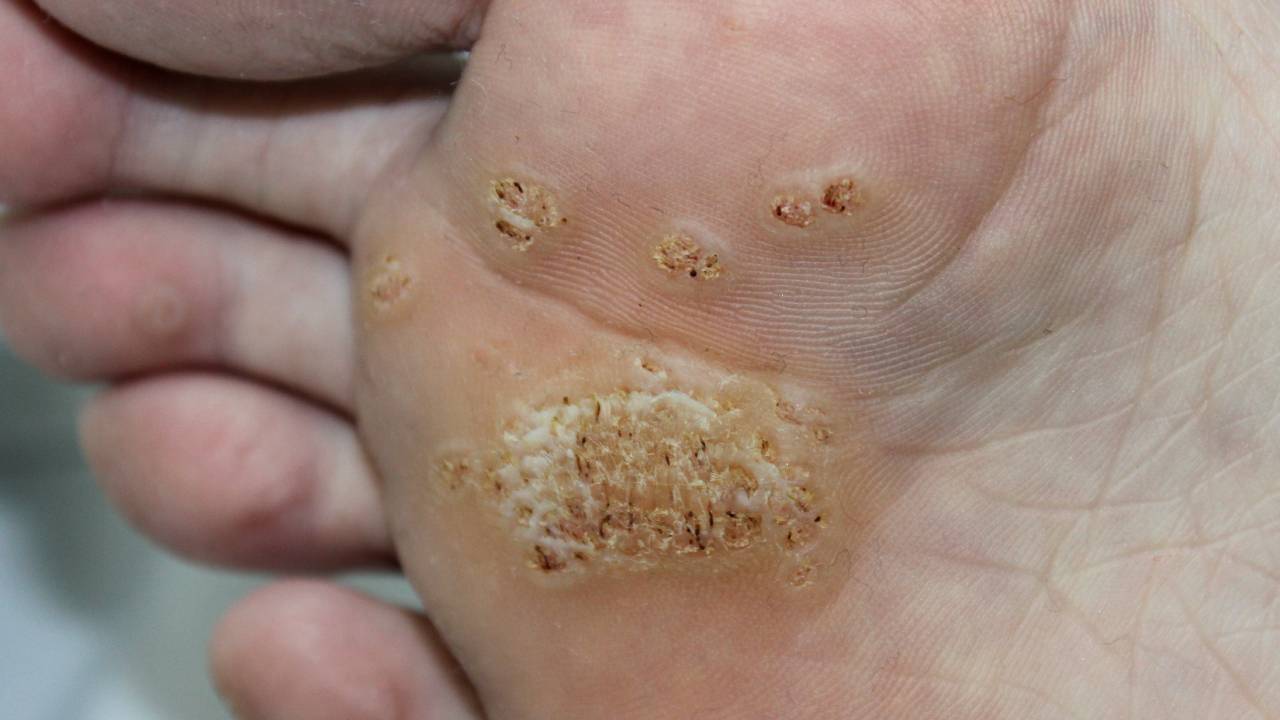
Plantar warts (verrucae plantaris) are common viral skin infections that affect the soles of the feet. They are caused by infection with the Human Papillomavirus (HPV), which enters the skin through microscopic breaks in the epidermal barrier and stimulates abnormal growth of skin cells.
Although plantar warts are benign, they can become painful, persistent, and increasingly difficult to treat if left unmanaged. Their location on weight-bearing areas of the foot often causes discomfort during walking and standing, while their appearance frequently leads to confusion with other conditions such as corns and calluses.
Unlike many common causes of foot pain, plantar warts are infectious. Delayed diagnosis or treatment may allow the infection to spread to other areas of the foot, result in multiple lesions, or increase the risk of transmission to others.
This guide provides a comprehensive overview of plantar wart infection, including causes, symptoms, diagnosis, treatment options, and preventative strategies.
What Are Plantar Warts? 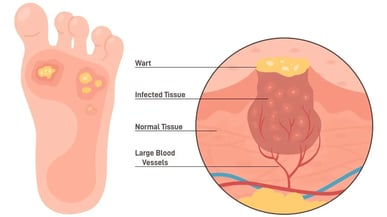
Plantar warts are viral lesions that develop on the soles of the feet following infection by certain strains of the Human Papillomavirus (HPV).
Once the virus enters the skin, it infects cells within the outermost layer of the epidermis and causes excessive keratin production. This results in a thickened area of skin that gradually develops into a plantar wart.
Unlike common warts that protrude outward, plantar warts are subjected to continuous pressure from walking and standing. As a result, they are often pushed inward into the skin, making them more painful and difficult to identify.
Plantar warts most commonly occur on:
- The heel
- The ball of the foot
- The toes
- The arch
Because these areas bear significant body weight, even relatively small lesions can cause considerable discomfort.
How it looks like?
Epidemiology: Who Gets Plantar Warts?
Plantar warts can affect individuals of all ages but are particularly common among:
- Children and adolescents
- Athletes
- Swimmers
- Military personnel
- Individuals who frequently use communal changing facilities
- People with weakened immune systems
Research suggests that school-aged children and teenagers experience the highest incidence due to increased exposure in communal environments and developing immune systems.
What & Where You Can Get Plantar Warts?
Plantar warts are caused by infection with specific strains of HPV.
The virus is commonly transmitted through direct or indirect contact with infected skin or contaminated surfaces. Warm and moist environments provide ideal conditions for viral survival and transmission.
Common locations where infection may occur include:
- Public swimming pools
- Gym shower facilities
- Locker rooms
- Communal changing areas
- Martial arts studios
- Sports facilities
The virus typically enters through small breaks in the skin, which may be invisible to the naked eye.
Risk factors include:
- Walking barefoot in public areas
- Excessive sweating
- Skin maceration
- Minor cuts or abrasions
- Previous wart infection
- Impaired immune function
How Does HPV Infect the Foot?
HPV infects the superficial layers of the skin by entering through microscopic defects in the epidermis.
Once inside, the virus hijacks normal cellular processes and stimulates excessive replication of keratinocytes. This leads to the characteristic thickened lesion associated with plantar warts.
One reason plantar warts can be difficult to eliminate is that HPV often evades immune detection. The virus may remain localised within the skin for months or even years before the immune system mounts an effective response.
This explains why some plantar warts resolve spontaneously while others persist despite repeated treatment attempts.
Clinical Signs and Symptoms of Plantar Warts
.jpg?width=680&height=357&name=wart-treatments-thumbnail%20(1).jpg)
The appearance and symptoms of plantar warts can vary depending on their size, location, and duration.
Common signs include:
- Rough or thickened skin lesions
- Localised pain during walking or standing
- Tenderness when pressure is applied
- Small black dots within the lesion
- Disruption of normal skin lines
- Callus-like appearance
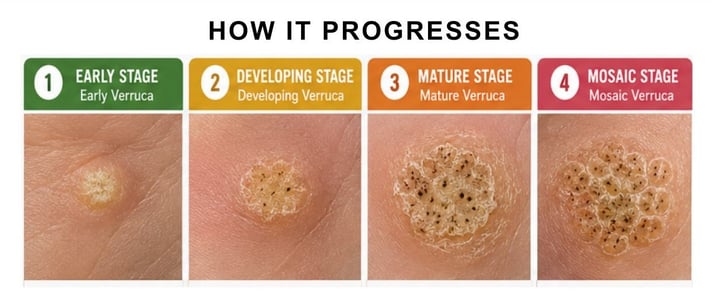
The small black dots often seen within plantar warts are thrombosed capillaries (tiny blood vessels) and are considered a distinguishing clinical feature.
Many patients describe the sensation as feeling like they are walking on a small stone or pebble embedded within the foot.
Plantar Wart vs Corn vs Callus: Key Diagnostic Differences
-
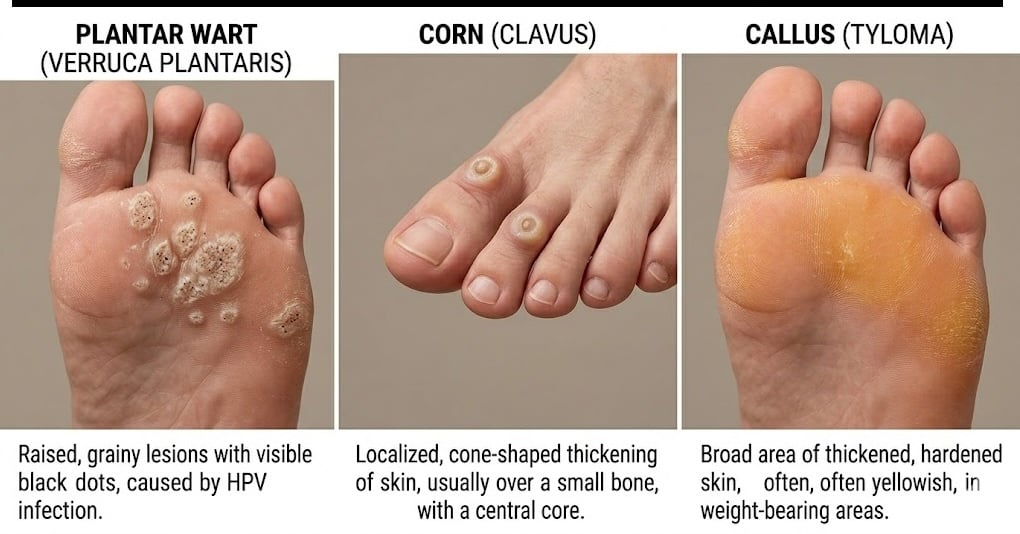
Plantar warts are frequently mistaken for corns and calluses because all three conditions may appear as areas of thickened skin.
Plantar Wart
Typically presents with:
- Black pinpoint dots
- Disrupted skin lines
- Pain when squeezed from the sides
- Viral origin
Corn
Typically presents with:
- A dense central core
- Localised pressure pain
- Friction-related development
- Intact skin lines
Callus
Typically presents with:
- Broad thickened skin
- Diffuse pressure distribution
- Less localised pain
- Mechanical origin
An accurate diagnosis is important because each condition requires a different treatment approach.
Patients who are unsure whether they have a wart, corn, or callus should seek professional assessment.
Related reading:
Why Are Some Plantar Warts Difficult to Treat?
Not all plantar warts respond equally to treatment.
Several factors may contribute to treatment resistance:
- Long-standing infection
- Large lesion size
- Multiple lesions
- Deeply embedded warts
- Immunocompromised status
- Delayed treatment
Plantar warts can also develop into mosaic warts, where multiple smaller lesions merge into a larger infected area.
The longer a wart remains untreated, the greater the likelihood of spread and increased treatment complexity.
How Are Plantar Warts Diagnosed?
Diagnosis is typically made through clinical examination.
A podiatrist will assess:
- Lesion appearance
- Pain characteristics
- Presence of thrombosed capillaries
- Skin line disruption
- Lesion location
- Surrounding tissue health
In most cases, advanced imaging is not required. However, atypical or persistent lesions may occasionally warrant further investigation.
Early diagnosis is particularly important because plantar warts often become more difficult to manage as they enlarge or spread.
Treatment Options for Plantar Warts
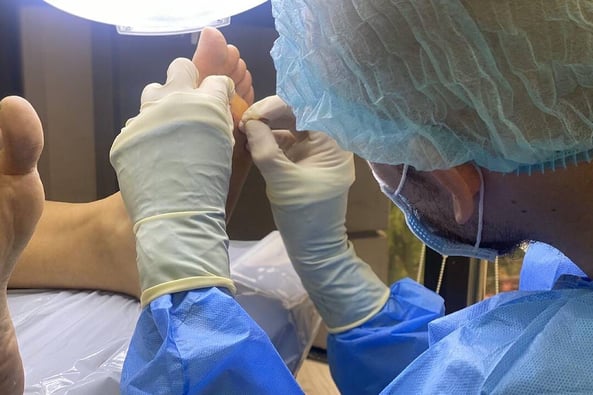
Treatment selection depends on several factors including lesion size, duration, location, patient age, and previous treatment history.
Salicylic Acid Therapy
Salicylic acid remains one of the most widely used first-line treatments.
It works by gradually breaking down infected skin tissue and encouraging wart removal over time.
Advantages include:
- Non-invasive treatment
- Widely available
- Suitable for many patients
However, treatment often requires prolonged and consistent application over several weeks or months.
Cryotherapy
Cryotherapy uses liquid nitrogen to freeze and destroy infected tissue.
Although commonly used, cryotherapy may involve:
- Multiple treatment sessions
- Treatment-related discomfort
- Temporary blistering
- Variable success rates
Some plantar warts respond well, while others prove resistant.
Debridement
Debridement involves the careful removal of excess overlying skin.
Benefits include:
- Reduced pain
- Improved comfort during walking
- Better penetration of adjunctive therapies
Debridement is frequently used in combination with other treatment modalities.
Swift® Microwave Therapy
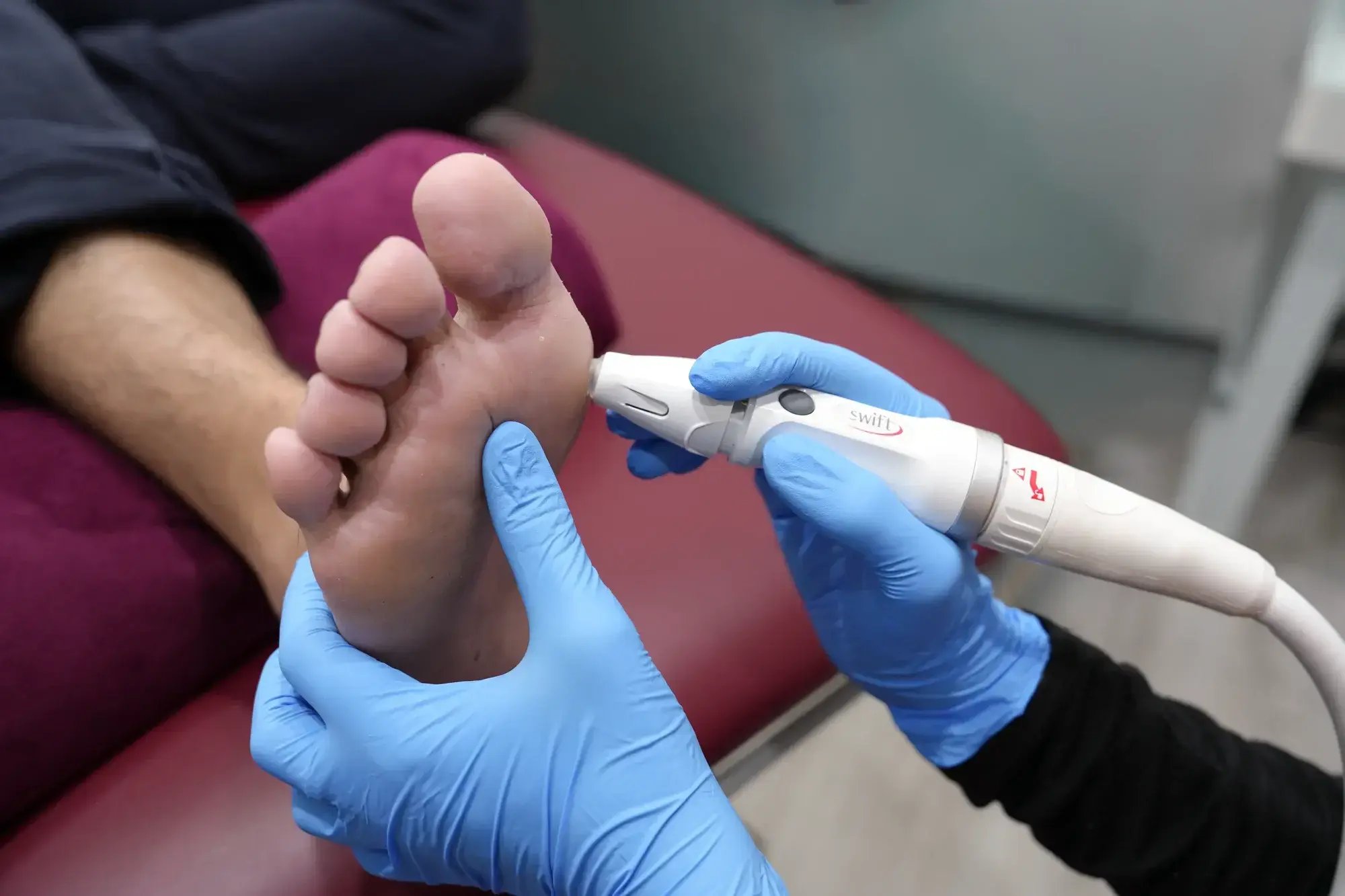 Swift® Microwave Therapy represents a newer treatment modality for plantar warts.
Unlike treatments that focus on physically destroying wart tissue, Swift delivers microwave energy that stimulates the body's immune response to recognise and eliminate HPV-infected cells.
Potential benefits include:
- No surgical excision
- No injections
- Minimal post-treatment downtime
- No open wound creation
- Suitable for many persistent or recurrent lesions
For patients with stubborn plantar warts that have failed conventional treatment, Swift may provide an alternative evidence-based treatment option.
Related reading:
Can Plantar Warts Resolve Without Treatment?
Yes.
Some plantar warts resolve spontaneously as the immune system eventually recognises and eliminates the virus.
However, spontaneous resolution is unpredictable and may take months or years.
During this time, the lesion may:
- Increase in size
- Become more painful
- Spread to other areas
- Infect other individuals
For this reason, many patients choose active treatment rather than observation alone.
When Should You See a Podiatrist?
Professional assessment is recommended if:
- The lesion is painful
- Walking becomes uncomfortable
- The wart is spreading
- Multiple lesions are present
- Home treatment has failed
- Diagnosis is uncertain
Early intervention may improve treatment outcomes and reduce the likelihood of recurrence.