




Monday, 27 July 2026

There's nothing quite like starting your day with a sharp pain in your heel the moment your feet hit the floor. If this sounds familiar, you're not alone. For many people, the pain gradually eases after walking around for a few minutes, but that temporary relief doesn't mean the condition has gone away.
Morning foot pain is a common complaint seen by podiatrists, and while it can have several causes, plantar fasciitis is the most common reason for heel pain with your first steps in the morning.
In this article, we'll explain why morning heel pain happens, the conditions that may be responsible, simple treatments you can try at home, and when it's time to seek professional care.
Why Does Heel Pain Feel Worse in the Morning?
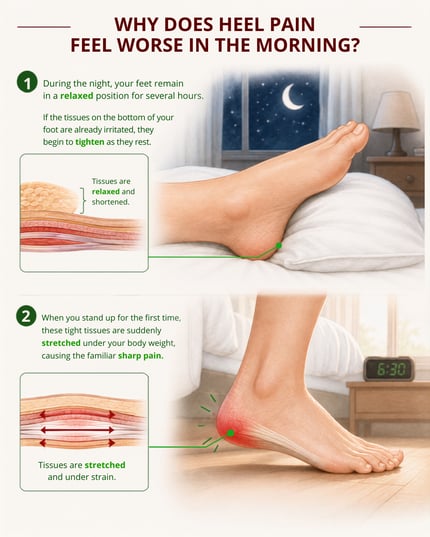
One of the most common questions patients ask is why the pain seems worst immediately after getting out of bed. The answer lies in what happens while you're asleep.
During the night, your feet remain in a relaxed position for several hours. When you have a heel condition, the tissues on the bottom of your foot are already irritated, but they begin to tighten as they rest. When you stand up for the first time in the morning, these tight tissues are suddenly stretched under your body weight, causing the familiar sharp pain.
As you continue walking, the tissues gradually loosen, which explains why the discomfort often improves after a few minutes. Unfortunately, the cycle can repeat after sitting for prolonged periods, which is why many people notice the pain again especially when standing after work or after a long drive.
Common Causes of Foot Pain When You Wake Up
Although plantar fasciitis is the leading cause, several other conditions can produce similar symptoms.
1. Plantar Fasciitis
Plantar fasciitis occurs when the plantar fascia, a thick band of tissue running from your heel to your toes, becomes irritated or overloaded.
Typical symptoms include:
- Sharp pain underneath the heel
- Pain that's worst during the first few steps in the morning
- Improvement after walking for several minutes
- Pain returning after prolonged sitting or standing
Risk factors include prolonged standing, running, carrying excess body weight, wearing unsupportive footwear, and having either very flat feet or very high arches.
2. Achilles Tendinopathy
The Achilles tendon connects your calf muscles to your heel bone. When this tendon becomes irritated, it can also cause stiffness and pain first thing in the morning.
Unlike plantar fasciitis, Achilles pain is usually located at the back of the heel rather than underneath it. It happens right at the point where the tendon attaches to the heel bone and can also be felt along the tendon itself. Many people also notice tight calf muscles and discomfort when climbing stairs or walking uphill.
3. Heel Spurs
Heel spurs are small calcium deposits that develop on the heel bone over time.
Contrary to popular belief, heel spurs themselves are often painless. Many people haveheel spurs without ever knowing it. In fact, it's usually the inflammation of the surrounding soft tissues, particularly the plantar fascia, that causes the symptoms rather than the spur itself.
4. Arthritis
Both osteoarthritis and inflammatory arthritis can cause stiffness and foot pain after periods of rest.
People with arthritis often notice:
- Morning stiffness lasting longer than 30 minutes
- Aching in multiple joints
- Swelling around the foot or ankle
- Gradually worsening symptoms over time
If several joints are affected, arthritis may be more likely than plantar fasciitis.
5. Nerve Compression
Conditions such as tarsal tunnel syndrome occur when nerves around the ankle become compressed.
Symptoms may include:
- Burning pain
- Tingling
- Numbness
- Electric shock sensations
- Pain that radiates into the arch or toes
Because nerve pain behaves differently from inflammation, a podiatrist may recommend further assessment if these symptoms are present.
6. Stress Fractures
A stress fracture is a small crack in the bone caused by repetitive loading.
Unlike plantar fasciitis, stress fracture pain usually:
- Continues throughout the day
- Becomes worse with activity
- Is tender to touch over a specific area
- May develop after increasing exercise or walking
Stress fractures require prompt assessment to prevent further injury.
7. Other Possible Causes
Less common causes of morning heel pain include:
- Fat pad syndrome
- Gout
- Inflammatory conditions
- Entrapped nerves
- Certain autoimmune disorders
Because many conditions produce similar symptoms, an accurate diagnosis is important before beginning treatment.
How Do I Know If It Is Plantar Fasciitis
If you're wondering whether plantar fasciitis is causing your symptoms, these are some of the most common signs:
| Symptom | Plantar Fasciitis |
| Sharp pain with first steps in the morning | ✓ |
| Pain underneath the heel | ✓ |
| Improves after walking | ✓ |
| Returns after sitting | ✓ |
| Tenderness when pressing the inside of the heel | ✓ |
While these symptoms strongly suggest plantar fasciitis, other conditions can present similarly. A clinical assessment helps confirm the diagnosis and rule out other causes.
How to Relieve Morning Heel Pain
The right treatment depends on the underlying cause of your heel pain. However, these simple measures can help relieve discomfort for many people:
Stretch Before Getting Out of Bed
Gentle stretches for your plantar fascia and calf muscles before standing can help reduce tension on the heel. Even a minute or two of stretching may make those first few steps more comfortable.
Wear Supportive Footwear
Avoid walking barefoot, especially on hard floors. Instead, wear supportive shoes or slippers with good cushioning and arch support to reduce stress on your heel. If you notice that the soles of your shoes are worn down unevenly or have lost their cushioning, it might be worth getting your gait assessed. Personalised insoles can also help by improving foot alignment, redistributing pressure, and providing additional support. A podiatrist can assess whether they are appropriate based on your foot structure and walking pattern.
See a Podiatrist if the Pain Persists
If your heel pain continues despite self-care, a podiatrist can identify the underlying cause and recommend appropriate treatment. This may include strengthening exercises, orthotics, footwear advice, or other evidence-based treatments tailored to your condition.
When Should You See a Podiatrist?
Although mild heel pain sometimes settles with rest and self-care, persistent symptoms shouldn't be ignored.
If you've been treating your feet without success or you're unsure which condition you have, an assessment by a podiatrist can help identify the underlying cause and ensure you receive the most appropriate treatment for lasting relief.
You should consider seeking professional advice if:
- Pain lasts longer than two to four weeks
- Walking becomes increasingly difficult
- The pain keeps returning
- You notice swelling or redness
- You cannot bear weight comfortably
- The pain followed an injury
- You experience numbness or tingling
An accurate diagnosis allows the most appropriate treatment to faster recovery and may help prevent chronic heel pain or a worsened condition.