



Friday, 14 August 2026
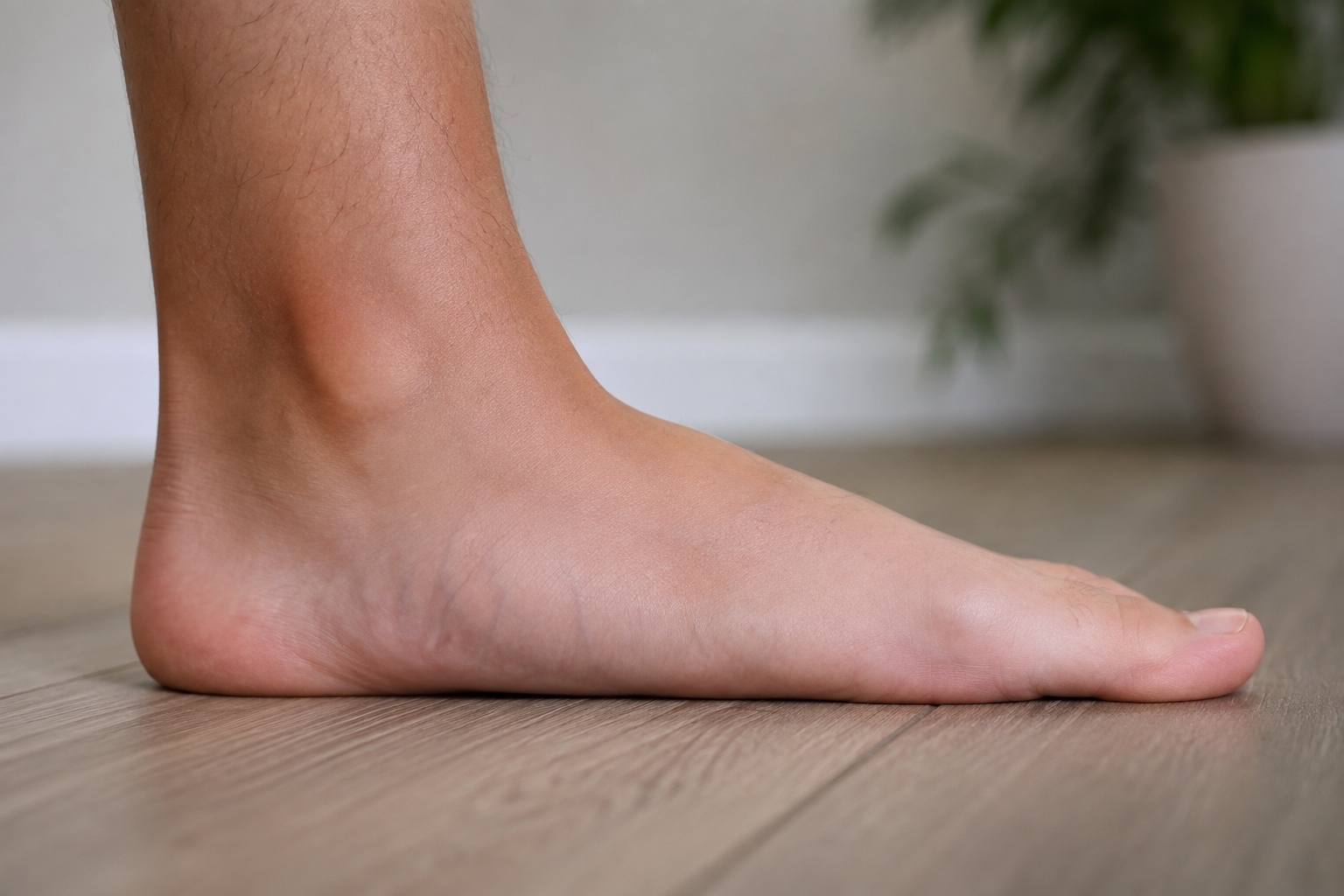
Noticed that your feet looks a little different from others? And they have little or no visible arch when standing, you're not alone.
Flat feet are a common foot type that affects both children and adults. For many people, they don't cause any discomfort or limit daily activities. However, for some, flat feet can contribute to pain, instability, or changes in the way they walk.
So how do you know whether your flat feet are normal or a sign that something needs attention?
In this article, we'll explain what flat feet are, when they're considered normal, the warning signs to look out for, and when it's a good idea to see a podiatrist.
What Are Flat Feet?
Flat feet, also known as fallen arches, occur when the arches of the feet appear low or absent while standing. Instead of a noticeable curve along the inside of the foot, most or all of the sole comes into contact with the ground.
.png?width=800&height=250&name=flat%20feet%20vs%20normal%20feet%20(East%20Coast%20Podiatry%20Singapore).png)
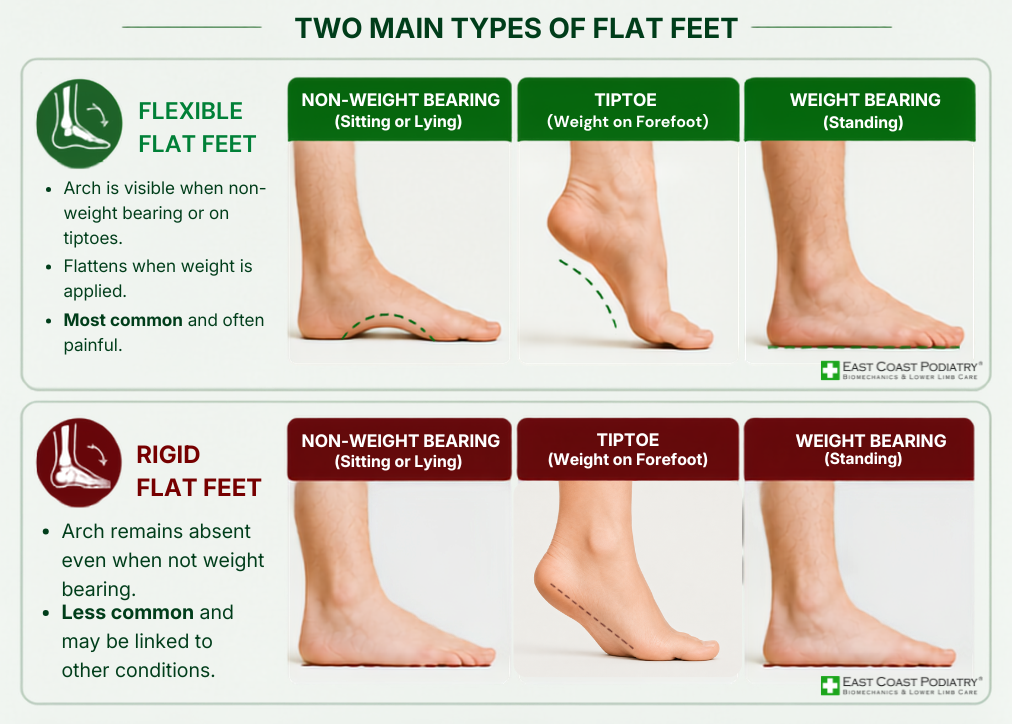
There are two main types of flat feet:
-
Flexible flat feet: An arch is visible when you're sitting, lying down, or standing on tiptoes, but it flattens when you put weight on your foot. This is the most common type and is often painless.
-
Rigid flat feet: The arch remains absent even when the foot isn't bearing weight. This type is less common and may be associated with underlying structural or joint conditions.
Having flat feet does not automatically mean you have a problem. Many people have naturally low arches and never experience any symptoms.
When Are Flat Feet Considered Normal?
In many cases, flat feet are completely normal and don't require treatment.
Your flat feet are likely to be a normal variation if you:
- Have never experienced foot or ankle pain.
- Can walk, run, and exercise comfortably.
- Don't feel limited during work, sport, or everyday activities.
- Have had flat feet since childhood without any issues.
- Wear shoes comfortably without unusual wear or discomfort.
It's also worth noting that flat feet are common in young children. Babies and toddlers naturally have flatter looking feet because their arches are still developing. At this point it is still not a concern for them unless it hurts or they keep tripping. As they grow, many children gradually develop more defined arches. Even if the arches remain low, treatment usually isn't necessary unless pain, stiffness, or difficulty walking develops.
The key point is this: Flat feet only becomes a concern if it's causing symptoms or affecting function.
While many people with flat feet never need treatment, others may benefit from supportive footwear or custom orthotics to help support the arches, improve foot function, and relieve discomfort if symptoms develop.
When Should You See a Podiatrist for Your Flat Feet?
 Optogait Assessment at East Coast Podiatry
While many cases of flat feet don't require treatment, there are situations where a professional assessment is recommended.
Consider seeing a podiatrist if you experience:
1. Persistent foot pain
Pain isn't considered a normal part of having flat feet. Ongoing discomfort in the arch, heel, or midfoot may indicate that the supporting structures of the foot are under excessive strain.
2. Pain in the knees, hips, or lower back
Because your feet form the foundation of your body's movement. Changes in foot mechanics can sometimes contribute to pain further up the kinetic chain. Ongoing discomfort in the arch, heel, or midfoot may indicate that the supporting structures of the foot are under excessive strain.While flat feet aren't always the cause, they can be one of several contributing factors.
3. Swelling along the inside of the ankle
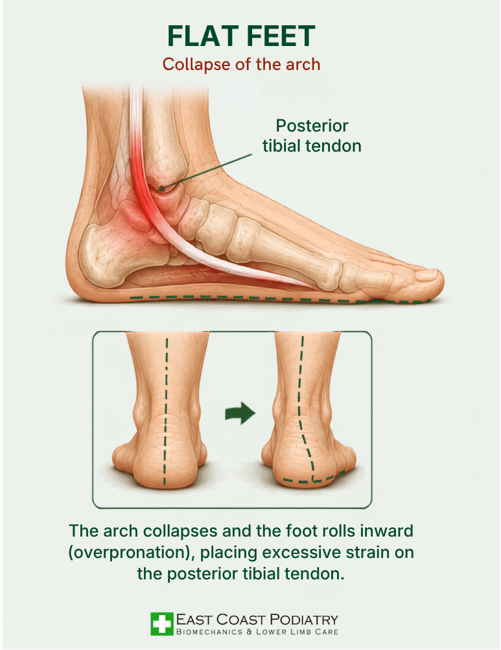 Swelling or tenderness near the inside of the ankle may indicate irritation or dysfunction of the posterior tibial tendon, an important structure that helps support the arch. This is particularly important if the symptoms develop in adulthood.
4. Your arch has recently collapsed
If you've always had normal arches but notice that one or both feet have become flatter over time, it's worth having the change assessed. Adult acquired flatfoot can develop gradually and may require early management.
5. Frequent ankle sprains or instability
If your ankles regularly "give way" or you feel unsteady when walking on uneven ground, your foot structure may be contributing to the problem.
6. Difficulty standing or walking for long periods
If everyday activities leave your feet feeling tired, sore, or fatigued, an assessment may help identify whether your flat feet are placing excessive stress on certain joints or muscles.
7. One foot is different from the other
While mild differences between feet are common, a sudden change in one foot, especially if it's painful or swollen, it definitely shouldn't be ignored.
What Causes Flat Feet?
Flat feet can develop for a variety of reasons. Some people are simply born with naturally lower arches, while others develop flat feet later in life.
Common causes include:
- Narrow toe box shoes
- Normal childhood development
- Age-related changes in ligaments and tendons
- Injury to the foot or ankle
- Posterior tibial tendon dysfunction
- Arthritis affecting the foot joints
- Pregnancy-related changes
- Excess body weight increasing stress on the feet
Identifying the underlying cause is important because treatment varies depending on what's contributing to the change in your foot.
Do All People with Flat Feet Need Orthotics?
No.
One of the biggest misconceptions is that everyone with flat feet needs custom orthotics.
Orthotics aren't prescribed based solely on the appearance of your arches. Instead, they're recommended when they are likely to improve comfort, reduce excessive strain, or support recovery from a specific condition.
For someone who has flat feet but no pain or functional limitations, treatment may not be necessary at all.
While many people remain pain-free throughout life, others may experience changes due to ageing, tendon dysfunction, injury, arthritis, or other health conditions. This is especially so when excessive strain is placed on the posterior tibial tendon as mentioned earlier in the article.
In this case, a podiatrist will consider your symptoms, lifestyle, activity level, and foot function before recommending orthotics or other interventions.
When To See A Podiatrist?
If your flat feet are painful or affecting your daily life, a podiatrist can assess both the structure and function of your feet to determine the most appropriate management plan.
During an assessment, your podiatrist may:
- Discuss your symptoms and medical history.
- Examine your feet and lower limbs.
- Assess your walking pattern (gait).
- Evaluate foot posture and joint mobility.
- Review your footwear.
- Recommend custom orthotics or treatment
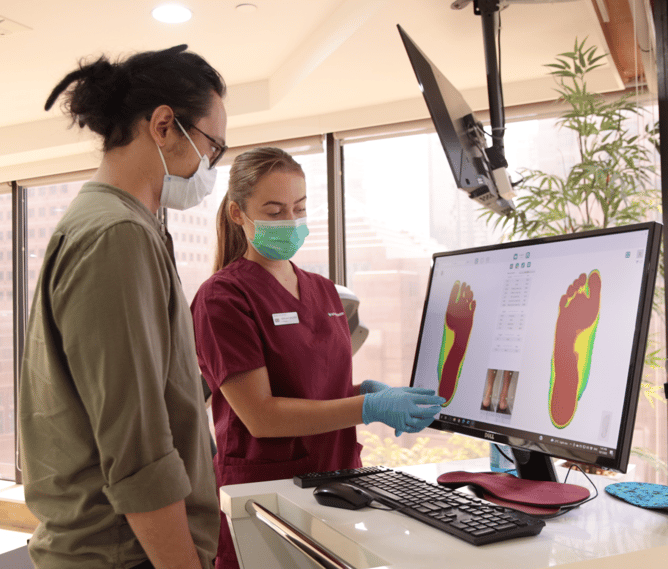
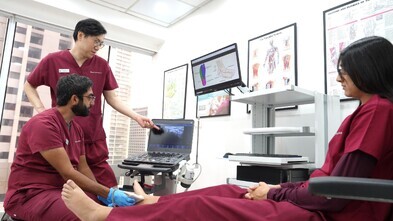
Our podiatrist showing analysing foot scan with patient
Treatment depends on the underlying cause and your individual needs. It may include:
- Advice on supportive footwear.
- Exercises to improve strength and flexibility.
- Activity modification during flare-ups.
- Custom or prefabricated orthotics where appropriate.
- Taping or bracing in some cases.
- Referral for further investigations or specialist care if required.
Flat feet are common, and in many cases they're simply a normal variation of foot shape that doesn't require treatment.However, if your flat feet are causing pain, affecting your ability to walk or exercise, or you've noticed changes in your arches as an adult, it's worth seeking professional advice.
Early assessment can help identify the cause of your symptoms and guide appropriate treatment before the problem progresses.