

Monday, 24 August 2026
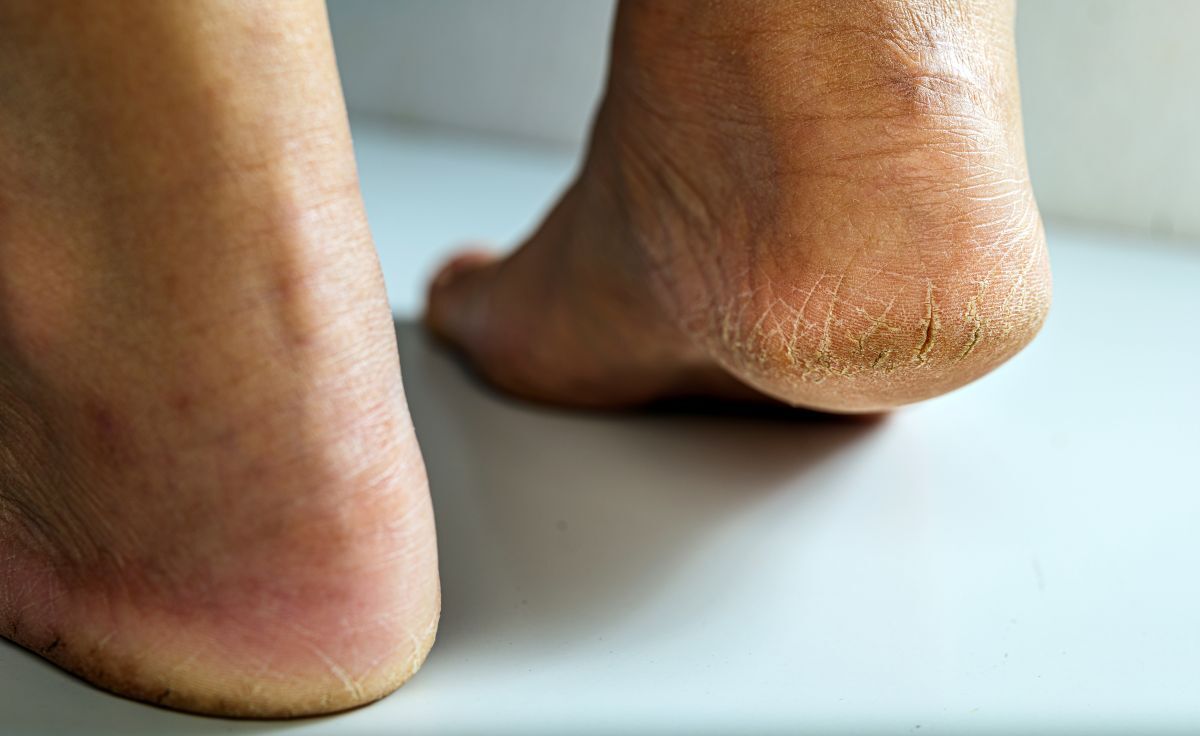
Cracked heels are a common foot problem in Singapore.This can range from mild dryness and rough skin to deep, painful fissures. They often start when the skin around the heel becomes dry and thickened. When pressure is placed on the heel while standing and walking, the skin can lose its ability to stretch and eventually split thus causing the ugly cracks you see often.
So, what causes cracked heels?
Dry skin is one of the most common causes, but factors such as prolonged standing, open-back footwear, hot showers, cold or dry weather, calluses, and certain skin or medical conditions can also contribute.
The good news is that many cases can be improved with consistent foot care. And most importantly, understanding what is causing your cracked heels can also help prevent them from coming back.
What Are Cracked Heels?
Cracked heels, sometimes called heel fissures, occur when the skin around the edges of the heels becomes excessively dry, thick, or hardened and develops visible splits.
At first, you may notice:
- Dry or flaky skin
- Rough, hardened areas around the heel
- White or yellowish skin
- Mild itching or irritation
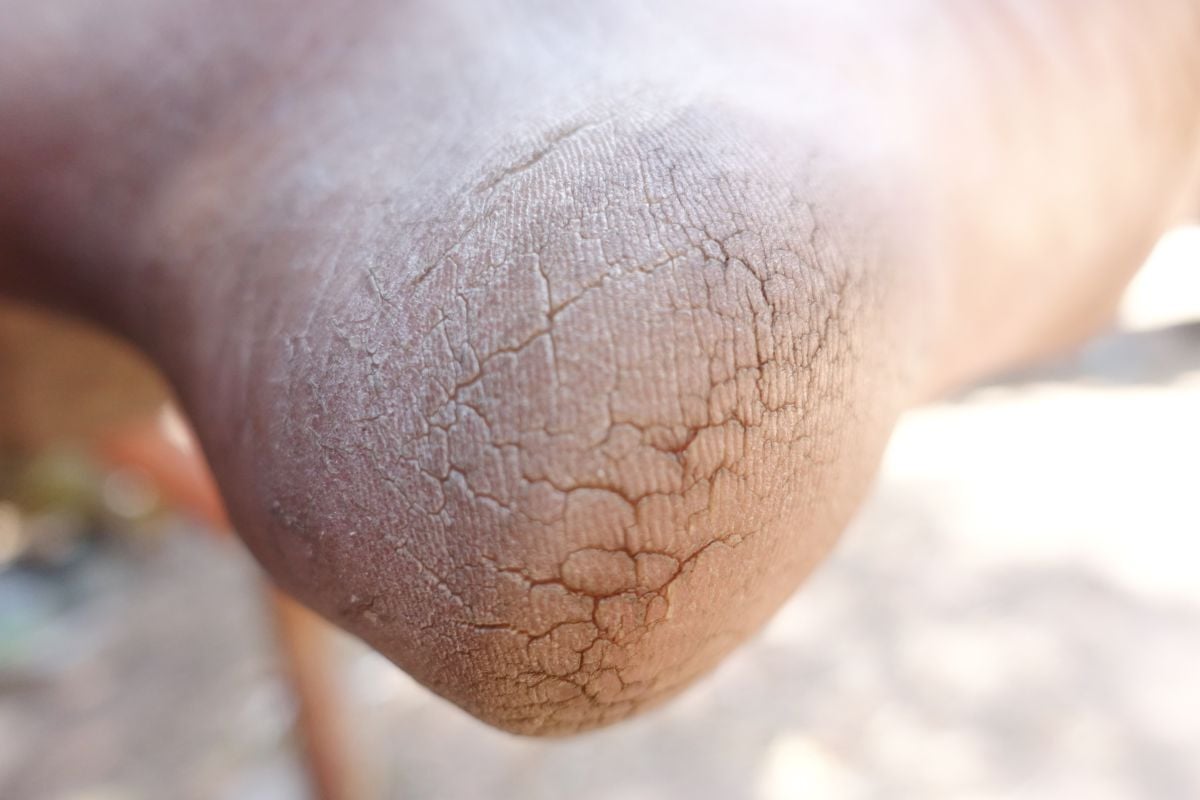
- Small visible cracks
As the skin becomes more severely cracked, the fissures can become deeper and painful. In some cases, they may bleed. Deep cracks can also compromise the skin barrier and increase the risk of infection.
Are Cracked Heels the Same as Calluses?
Not quite.
A callus is an area of thickened skin, usually caused by repeated pressure or friction. Cracked heels, on the other hand, are fissures or splits that develop in the skin around the heel.
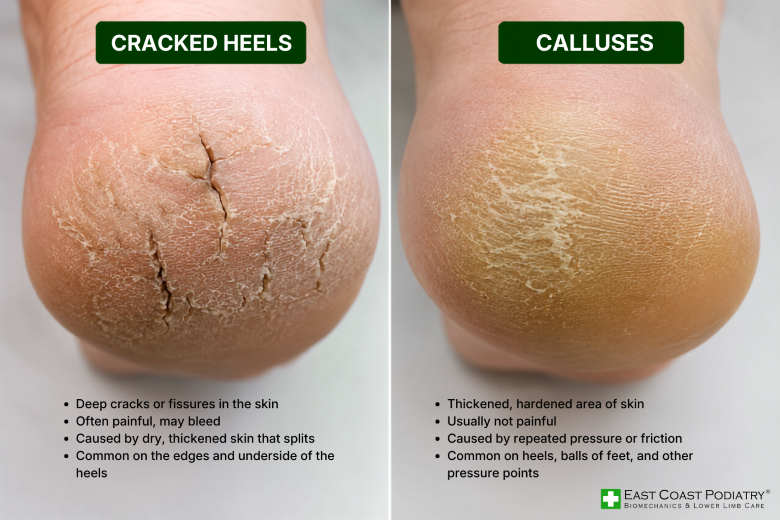 Comparison of cracked heels and calluses
However, the two can be closely related. Thick, hardened skin around the heel is less flexible, so pressure from standing and walking can cause it to split.
In other words, a callus or corn can contribute to cracked heels, but a callus and a cracked heel are not the same thing.
| Feature | Cracked Heels | Calluses |
| What are they? | Splits or fissures that develop in the skin around the heel | Areas of thickened, hardened skin |
| Main cause | Often linked to dry, thickened skin combined with pressure and reduced flexibility | Usually caused by repeated pressure or friction |
| Appearance | Visible lines, splits, or fissures in the skin | Thick, rough, hardened patches of skin |
| Common location | Around the edges and underside of the heels | Heels, balls of the feet, toes, or other pressure points |
| Can they be painful? | Yes, especially when cracks become deep | Usually not, although severe calluses can become uncomfortable |
| Can they bleed? | Deep fissures may bleed | Generally do not bleed unless the skin is injured |
| Relationship | Can develop when thickened heel skin splits under pressure | Thickened skin can make the heel less flexible and contribute to cracking |
What Causes Cracked Heels? 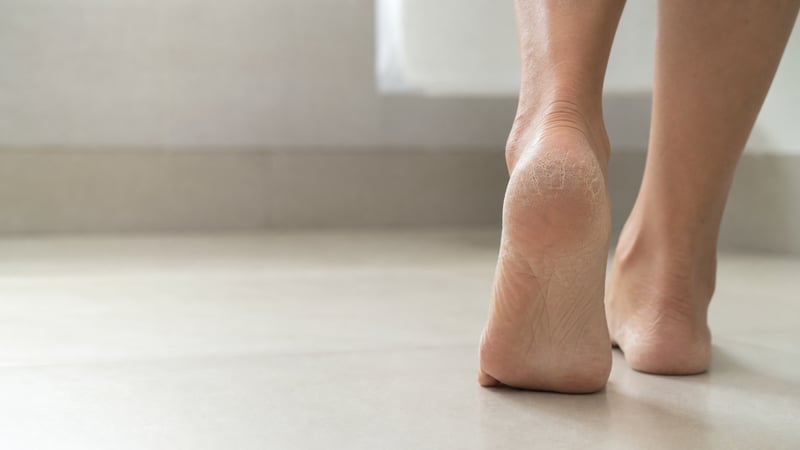
Several factors can contribute to cracked heels, and they often work together. Dryness can make the skin less flexible, while pressure, friction, footwear, and certain health conditions can make cracking more likely.
1. Dry, Thickened Skin and Calluses
Dry skin is one of the most common causes of cracked heels.
As mentioned above, when the skin loses moisture, it can become rough, less flexible, and more prone to cracking. The heels are particularly vulnerable because they experience repeated pressure throughout the day.
If dry skin becomes thickened around the edges of the heel, the combination of reduced flexibility and pressure can eventually result in fissures.
2. Prolonged Standing, Walking, and Pressure
This leads us to the next point on repeated pressure and friction. This can cause the skin on your feet to thicken which is the body's natural response to protect the area.
People who spend much of the day on their feet, particularly on hard surfaces, or wear shoes with little support, may be more prone to developing cracked heels.
This is why treating excessive dryness and thickened skin early can help prevent small cracks from becoming deeper fissures.
3. Footwear and Friction
The shoes you wear can also contribute to cracked heels. Open-back footwear, such as flip-flops and some sandals, provides less support around the heel and may allow the skin to spread outward under pressure.
Poorly fitting shoes can also create additional pressure or friction. Choosing comfortable, supportive footwear can help reduce stress on the heels.
4. Weather, Hot Water, and Harsh Products
Environmental and personal care factors can contribute to dry skin. Cold or dry weather, low humidity, long hot showers, and harsh soaps or cleansers can all reduce moisture or irritate the skin.
If your heels tend to become worse during colder or drier months, environmental dryness may be playing a role. Using gentle cleansers, avoiding excessively hot water, and moisturizing regularly can help protect the skin barrier.
Environmental and personal-care factors can contribute to dry skin. Cold or dry weather, low humidity, long hot showers, and harsh soaps or cleansers can all reduce moisture or irritate the skin.
If your heels tend to become worse during colder or drier months, environmental dryness may be playing a role. Using gentle cleansers, avoiding excessively hot water, and moisturizing regularly can help protect the skin barrier.
5. Skin and Existing Medical Conditions
Sometimes, persistent or severe cracked heels can be associated with an underlying condition. Eczema and psoriasis, for example, can cause dry, irritated, or thickened skin that may crack.
Certain medical conditions, including diabetes, can also make foot problems more significant. Diabetes can affect sensation, circulation, and the skin, potentially making cracks harder to notice or heal.
If cracked heels are persistent, severe, painful, or accompanied by other unusual symptoms, it's a good idea to speak with a healthcare professional.
What Do Cracked Heels Look and Feel Like?
Cracked heels can look different depending on how severe they are.
Common signs include:
- Dry, flaky skin
- Rough or hardened skin
- Thickened skin around the heel
- Small lines or fissures
- Redness or irritation
- Itching
- Tenderness
- Pain when standing or walking
- Deep cracks that may bleed
A small superficial crack may cause little discomfort, while deeper fissures can become painful and make everyday activities uncomfortable.
How to Treat Cracked Heels at Home
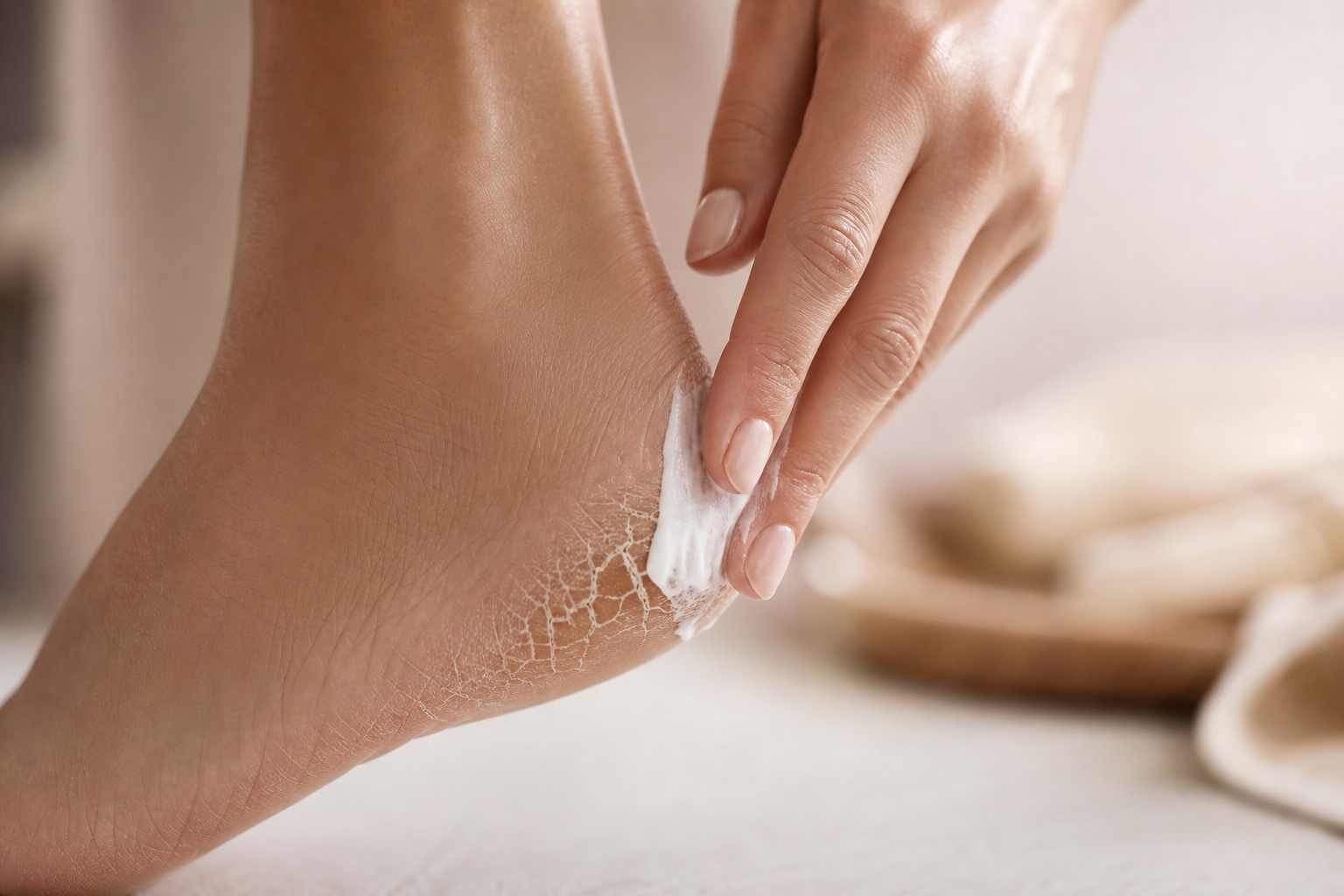
For mild cases, a consistent foot-care routine can often help improve dry, cracked heels.
1. Moisturize Regularly
Moisturizing is one of the most important steps in treating dry, cracked heels.
Apply a thick cream or ointment regularly, especially after bathing while the skin is still slightly damp. Dermatologists recommend moisturizers containing ingredients such as urea, alpha hydroxy acids, or salicylic acid for dry, cracked heels.
For particularly dry or thickened heels, look for products containing ingredients such as urea, salicylic acid, or alpha hydroxy acids (AHAs). These ingredients can help soften and remove excess thickened skin while improving moisture. They may cause some stinging or irritation, so follow the product's directions and avoid applying them more often than recommended. You may also consult with our podiatry team to see what cream is recommended for your condition.
Petroleum jelly can also help create an occlusive barrier that reduces moisture loss. Applying it before bed and wearing cotton socks can help lock in moisture overnight.
2. Gently Remove Excess Dead Skin
If your heels have thickened, hardened skin, gentle exfoliation may help.
After bathing or soaking the feet briefly in warm water, you can gently use a foot scrubber or similar tool to remove some dead skin. A note for foot scrubbers, you may want to look at proper foot scrubbing videos for references to avoid over-scrubbing the foot.
Avoid aggressive scraping or cutting. Removing too much skin can damage the area and make cracking or infection more likely.
3. Avoid Very Hot Water
Some people have the misconception that the hotter the water is the better the foot soak is, but this is not true. Use warm rather than hot water and avoid spending excessive amounts of time in the bath or shower.
Afterward, gently pat your feet dry rather than rubbing them vigorously.
4. Protect the Cracks
For some cracked heels, a liquid bandage or similar protective dressing may help create a barrier over the fissure while the skin heals.
If a crack is deep, bleeding, infected, or particularly painful, however, podiatry advice is more appropriate than relying solely on home treatment.
5. Wear Supportive Footwear
Choose shoes that fit properly and provide adequate support.
If your heels are cracked, avoiding open-backed footwear may help reduce pressure and prevent the skin from spreading and cracking further.
How Long Do Cracked Heels Take to Heal?
There isn't one fixed healing time for cracked heels as everyone's recovery time depends on how serious the cracks are and your own body's ability to recover.
However, mild dryness and superficial cracks may improve with consistent moisturizing and appropriate foot care. Deeper fissures can take longer, particularly if the underlying cause isn't addressed.
If your heels aren't improving despite regular care, or if the cracks are becoming deeper or more painful, speak with a healthcare or podiatry professional. Persistent cracking can sometimes be related to an underlying skin or medical condition.
When Should You See a Doctor or Podiatrist?
Many cases of cracked heels can be managed with regular foot care. However, some situations warrant professional attention.
Consider speaking with a healthcare professional if:
- Your cracks are deep or very painful.
- Your heels are bleeding.
You notice swelling, significant redness, warmth, or other signs of infection.
Your cracked heels aren't improving with home care.
The problem keeps coming back.
You have an underlying skin condition.
You have diabetes or another condition that affects sensation or circulation in your feet.
People with diabetes should be particularly careful with cracks, wounds, and other changes to their feet because complications can become more serious.
An accurate diagnosis allows the most appropriate treatment to begin sooner, helping prevent ongoing discomfort and complications.