

Your Sandals Might Be Hurting Your Feet: 7 Signs It's Time for a Change
Friday, 25 September 2026
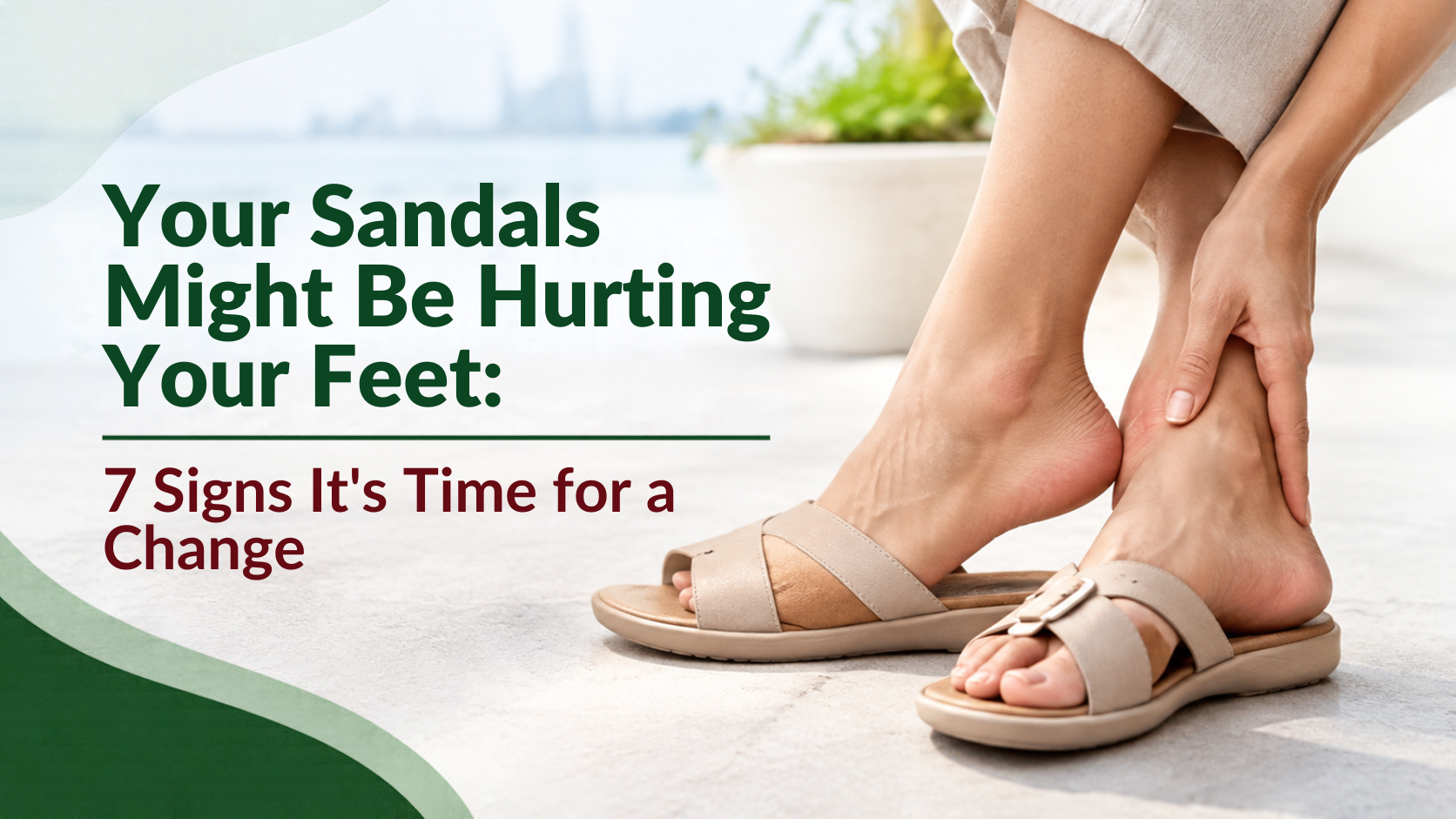
Sandals or slippers are a common go-to choice for many people in Singapore. They’re easy to slip on, keep your feet cool and are often the footwear of choice for casual outings, holidays and everyday wear.
But while sandals can be comfortable and convenient, the wrong pair may contribute to foot pain and discomfort.
If your feet regularly ache after wearing your sandals, it may be worth taking a closer look at your footwear. From a lack of support to worn-out soles, there are several signs that your sandals may no longer be doing your feet any favours.
Here are seven signs it may be time to replace your sandals.
1. Your Feet Hurt After Wearing Them
Comfort should always be one of the first things to consider.
One of the clearest signs that your sandals may not be suitable for you is recurring foot pain after wearing them.
You may notice discomfort in your:
- Heels
- Arches
- Balls of your feet
- Toes
- Ankles
This doesn't necessarily mean that your sandals are the only cause of your pain. However, footwear that doesn't provide the right level of support, cushioning or stability for your feet may contribute to discomfort, particularly when you're walking or standing for long periods.
If you regularly experience heel pain after wearing certain sandals, it may be worth considering whether your footwear is providing enough support and cushioning for your daily activities.
2. You Grip Your Sandals With Your Toes
Have you ever noticed yourself curling your toes when walking in sandals?
This can happen when a sandal doesn't stay securely on your foot. Your toes may instinctively grip the sandal to help keep it in place as you walk. This may sound very logical and harmless at first, repeatedly doing so can have consequences for the way you walk and how your lower limbs work together.
Occasionally doing this isn't necessarily a problem. However, if you're constantly gripping with your toes because your sandals are loose or poorly secured, your footwear should definitely be reconsidered. Not only are you more proned to falls, your lower limbs might also compensate by placing additional strain on other muscles when as you walk.
A well-fitting sandal should stay reasonably secure on your foot without requiring you to consciously hold onto it with your toes.
3. The Sole Is Extremely Thin or Has Lost Its Cushioning
Not all flat sandals are necessarily bad for your feet. However, a sandal with an extremely thin or worn-out sole may provide little cushioning between your feet and the ground.
This can become more noticeable if you're wearing them for:
- Long walks
- Shopping Trips
- Sightseeing
- Travel
- Extended periods of standing
The amount of cushioning you need depends on the individual and the activity. But if your feet consistently feel sore or tired after wearing a particular pair, consider whether the sandal provides enough cushioning for how you use it.
4. Your Sandals Bend or Twist Too Easily
Flexibility can be a popular feature in footwear, but there can be too much of a good thing.
If your sandals can easily fold in half or twist significantly from side to side, they may offer limited stability.This doesn't mean that every sandal needs to be rigid. Rather, your footwear should provide an appropriate balance of flexibility and support for your activity and individual needs.
For everyday walking, a sandal that provides some structure may feel more comfortable than one that offers very little support.
5. Your Sandals Are Causing Rubbing, Blisters or Pressure Points
Your sandals shouldn't leave you constantly dealing with blisters, rubbing or painful areas of pressure like corns or calluses.
Pay attention if you regularly notice:
- Red marks where the straps sit
- Blisters
- Chafing
- Tender areas
- Localised pressure on your toes or the sides of your feet
- Thickened or hardened skin developing in certain areas
These pressure points can occur when a sandal doesn't fit the shape of your foot properly. Straps that are too tight, narrow footbeds or areas where your foot repeatedly rubs against the sandal can all create friction and pressure.Sometimes, adjusting the straps or changing the way the sandal fits may solve the problem. But if a particular pair repeatedly causes irritation, it may simply not be the right fit for your feet.
Continuing to wear uncomfortable footwear can cause that repeated pressure and friction on the skin to thicken. This may contribute to calluses or corns, which can become uncomfortable or painful when pressure continues.
6. Your Toes or Heel Hang Over the Edge
With online shopping becoming an increasingly popular way to purchase shoes, it can be tempting to keep a pair that looks good but doesn't quite fit properly. Without being able to try the sandals on beforehand, it can also be harder to judge whether they are the right size and shape for your feet.
A well-fitting sandal should be an appropriate size and shape for your foot.
If your toes extend beyond the front of the sandal or your heel hangs significantly over the back, it may be too short. On the other hand, if your foot moves around excessively inside the sandal, it may be too loose or poorly fitted.
Your toes should have enough room without spilling over the edge, while your heel should sit securely on the sandal's footbed.
Fit is particularly important when you're planning to walk for extended periods. A sandal that feels acceptable for a five-minute trip may not feel so comfortable after several hours of walking.
7. Your Sandals Are Worn Down or Uneven
When was the last time you looked at the bottom of your sandals?
The upper may still look perfectly fine while the sole has become significantly worn.
Look for:
- Smooth patches where the tread used to be
- Uneven wear
- A visibly worn-down heel
- Reduced grip
- Cracks or deterioration in the sole
Uneven wear can also provide clues about how your foot and sandal interact while you walk.
If the sole is significantly worn or the sandal no longer provides reliable traction, it's probably time to consider replacing it.
What Should You Look for in a Good Pair of Sandals?
There isn't one type of sandal that is perfect for everyone. The right choice depends on your feet, your activities and how long you intend to wear them.
However, when choosing everyday sandals, consider looking for:
|
What to Look For |
Why It Matters |
|---|---|
|
Secure Fit |
Your sandals should stay on your feet without requiring you to grip them with your toes. |
|
Toe Room |
Your toes shouldn't be squeezed together or hanging over the edge. |
|
Cushioning |
Consider whether the sandal provides enough cushioning for the amount of walking or standing you'll be doing. |
|
Support & Stability |
Some structure can be helpful, particularly if you're going to be walking for longer periods. |
|
Traction |
The sole should provide adequate grip for the surfaces you're likely to encounter. |
|
Comfort |
Your sandals should feel comfortable when you're wearing them. Persistent discomfort is a reason to reassess the fit and suitability of your footwear. |
If your sandals don't fit quite right, or the soles doesn't provide the support and cushioning your feet need, customised insoles may be an option to consider. They can provide additional, personalised support where standard insoles aren't suitable for your individual foot needs.
Can the Wrong Sandals Cause Heel Pain or Plantar Fasciitis?
Footwear isn't necessarily the sole cause of conditions such as plantar fasciitis, but inappropriate footwear may contribute to foot discomfort in some people. If you already experience heel pain or plantar fasciitis, you may find that certain sandals aggravate your symptoms, particularly if they offer little cushioning or support.
However, simply changing your sandals may not address the underlying cause of persistent heel pain.
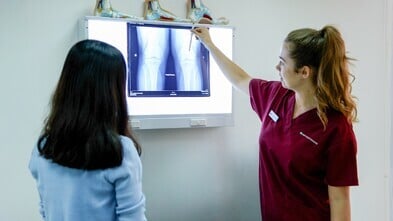
If pain continues despite changing your footwear, or if it is affecting your ability to walk, exercise or carry out your normal activities, a podiatry assessment can help determine what may be contributing to your symptoms.
When Should You See a Podiatrist?
Your sandals shouldn't leave your feet feeling worse every time you wear them.
Sometimes, the solution may be as simple as replacing an old pair or choosing footwear with a more appropriate fit and level of support. But if foot pain continues even after changing your footwear, it's worth looking beyond your sandals.
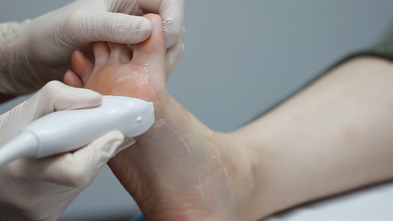
Persistent heel pain, arch pain, forefoot pain or ankle discomfort can have several possible causes. A podiatrist can assess your feet, walking mechanics and symptoms to help identify the underlying problem and discuss appropriate treatment options.
Consider seeking professional advice if you're experiencing:
- Persistent foot or ankle pain
- Pain that affects the way you run
- Recurring blisters or hot spots
- Repeated toenail problems
- Numbness or tingling
- Pain that increases as your training progresses
- Uncertainty about whether your footwear may be contributing to your symptoms
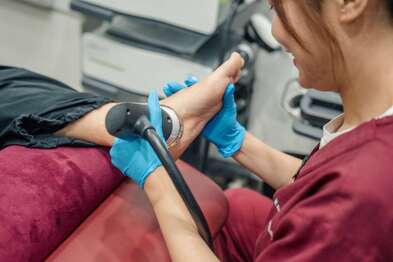
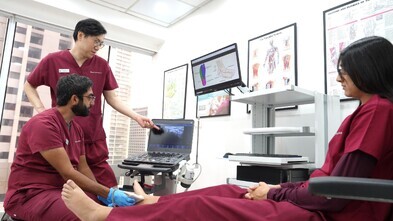
At East Coast Podiatry, we assess a range of foot and lower limb conditions, including heel pain, plantar fasciitis and other causes of foot discomfort. Your symptoms can be assessed in the context of your footwear, activities and individual needs to help you better understand what may be contributing to the problem.
Book an Appointment
Find An East Coast Podiatry Clinic Near You
With five conveniently located clinics in Bukit Timah, Kembangan, Novena, and Orchard & Marine Parade, we provide thorough assessments and personalised care methods to address a wide range of lower limb issues that you or your family members might face. From initial assessment to tailored care plans, we ensure that every step of your journey is handled with expertise and attention to detail.
| Clinic Location | Operating Hours |
| Bukit Timah, Kembangan, Marine Parade, Novena | Mon to Sat - 9am to 6pm, Sun & Public Holidays - Closed |
| Orchard | Mon to Sun - 9am to 6pm, Public Holidays - Closed |
We recommend that you schedule an appointment prior to visiting our clinics.
Orchard
302 Orchard Road
Tong Building #09-02 (Rolex Centre)
Singapore 238862
Tel: +(65) 6884 4123
Kembangan
18 Jalan Masjid
Kembangan Plaza #B1-02
Singapore 418944
Tel: +(65) 6848 5156
Novena
10 Sinaran Drive
Novena Medical Centre #08-13
Singapore 307506
Tel: +(65) 6235 2132
Bukit Timah
1 Fifth Avenue
Guthrie House #02-04
Singapore 268802
Tel: +(65) 6235 9080
Marine Parade
80 Marine Parade Rd
Parkway Parade #08-04
Singapore 449269
Tel: +(65) 6592 8082