




Skip to content
Fungal-Toenail

What is a Nail Fungus Infection?

A nail fungus infection, medically known as Onychomycosis, occurs when fungi invade the nail unit, the nail plate, the nail bed beneath it, and sometimes the matrix where the nail grows from. These fungi feed on keratin, the protein that gives nails their structure, which is why an infected nail gradually becomes discoloured, thickened, and brittle. It is usually caused by dermatophytes, the same group of fungi responsible for athlete's foot, and toenails are affected far more often than fingernails because they spend more time in the warm, enclosed, and often damp environment of a shoe.

Types of Nail Fungus Infection

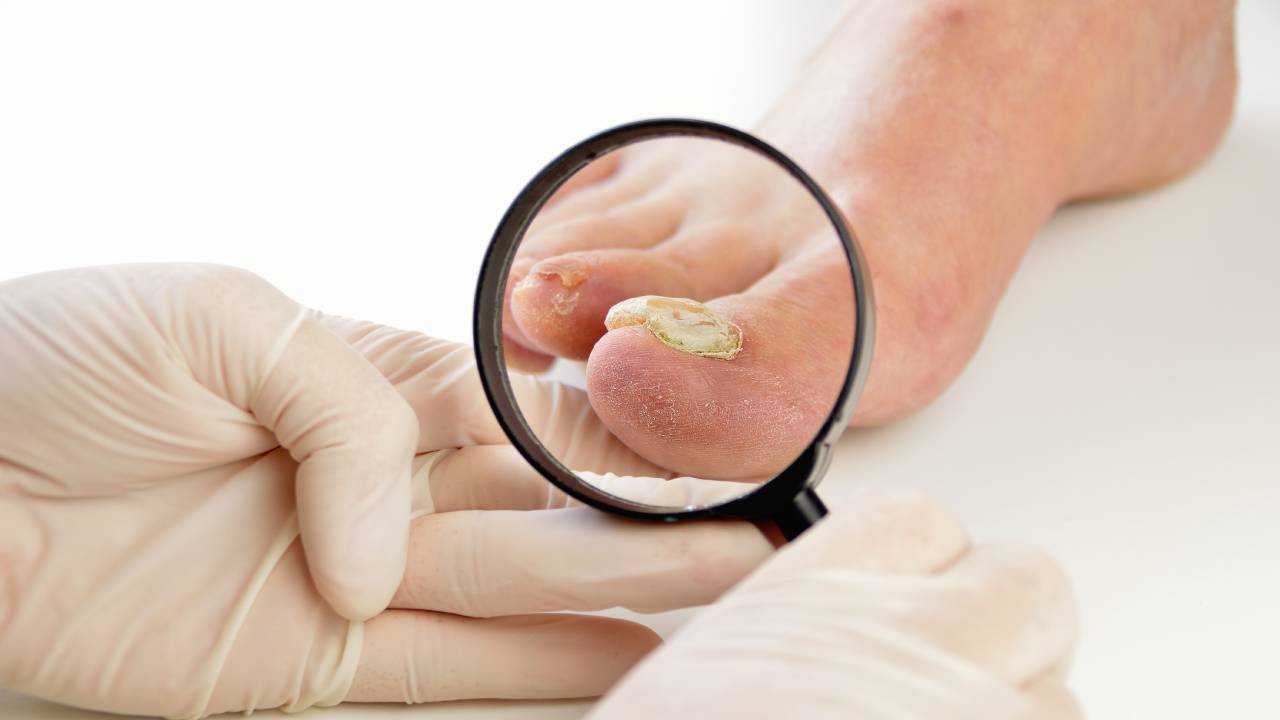
After understanding the causes of toenail fungus, it is equally important to recognise the symptoms for timely intervention. Common symptoms of fungal toenails include:

  • Discolouration: The toenail may become yellow, white, or brown, which is one of the earliest signs of fungal infection.
  • Thickening of the Nail: As the infection progresses, the toenail may become thickened and more difficult to trim.
  • Brittle or Crumbly Nails: Infected toenails may become brittle and start to break or crumble easily, losing their natural strength.
  • Distorted Nail Shape: The shape of the toenail may change, appearing more curved or warped, often due to thickening and uneven growth.
  • Separation from the Nail Bed: The toenail may begin to lift away from the nail bed, a condition called Onycholysis, which can cause discomfort.
  • Foul Odour: In some cases, a mild to strong unpleasant smell may be present due to the fungal infection.
fungal-nail-infection

Because fungal toenails don’t always cause significant discomfort early on, it’s easy for the condition to be neglected. However, routine nail and skin care at the podiatrist’s is crucial for those at risk. Regular check-ups help catch any subtle changes in the nails, ensuring timely intervention before the infection becomes more serious.

Types of Nail Fungus Infection
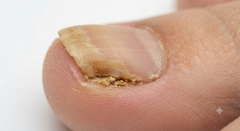
Distal Subungual Onychomycosis

Distal Subungual Onychomycosis

The most common form. It begins at the tip or side of the nail and spreads towards the base, typically causing yellowing, thickening, and a build-up of debris beneath the nail.
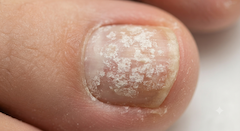
White Superficial Onychomycosis

White Superficial Onychomycosis

Appears as chalky white patches on the surface of the nail. It tends to stay superficial and can sometimes be scraped away, but it returns if the underlying fungus is not addressed.
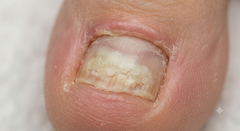
Proximal Subungual Onychomycosis

Proximal Subungual Onychomycosis

A less common form that starts at the base of the nail near the cuticle. It is more often seen in people with weakened immune systems and may warrant further medical review.
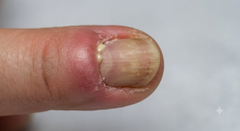
Candidal Onychomycosis

Candidal Onychomycosis

Caused by yeast rather than dermatophytes, this type more often affects the fingernails and surrounding skin, and is sometimes linked to prolonged moisture exposure or underlying health conditions.
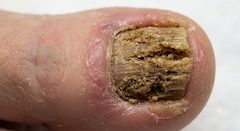
Total Dystrophic Onychomycosis

Total Dystrophic Onychomycosis

The most advanced stage, where the entire nail becomes thickened, crumbly, and severely distorted, usually after a long-standing, untreated infection.

Common Causes and Risk Factors of Nail Fungus Infection

Toenail fungus often starts small but can take hold when conditions favour its growth. Understanding what causes it, and who is most vulnerable, helps you act early.

Causes

  • Warm, Damp Environments: Public pools, locker rooms, and tight-fitting shoes trap moisture, creating ideal conditions for fungi to thrive.
  • Wet Weather Season: During the south-west monsoon (June to September), humidity leaves lingering moisture in shoes and socks, making infections more likely.
  • Poor Foot Hygiene: Failing to wash and dry the feet properly, along with excessive sweating (hyperhidrosis), promotes a damp, warm environment for fungi.
  • Athlete's foot: A fungal skin infection on the feet can easily spread to the toenails if it isn't managed.
  • Nail trauma: Repeated nail trauma, such as stubbing or pressure from tight shoes damages the nail, making it easier for fungi to take hold.

Risk Factors

While anyone can develop nail fungus, you may be at higher risk if you:

  • Are older, as nails grow more slowly and become more brittle with age.
  • Have diabetes, which can reduce circulation and sensation in the feet, making infections harder to notice.
  • Have poor circulation, which limits the body's ability to fight off infection.
  • Have a weakened immune system, from a health condition or medication.
  • Sweat heavily, keeping the feet persistently damp.
  • Are active in sports, with communal showers and repeated minor nail trauma.
  • Have had athlete's foot or nail fungus before, as infections can spread and tend to recur.

Signs and Symptoms of Toenail Fungus

Because nail fungus doesn't always cause discomfort early on, it's easy to overlook. Watch for these common signs:

  • Discolouration: The nail may turn yellow, white, or brown, this is often one of the earliest signs of infection.
  • Thickening of the Nail: As the infection progresses, the nail thickens and becomes harder to trim.
  • Brittle or Crumbly Nails: Infected nails may weaken and start to break or crumble at the edges
  • Distorted Nail Shape: The nail may appear curved or warped due to thickening and uneven growth.
  • Separation from the Nail Bed: The nail may lift away from the nail bed, a condition called onycholysis, which can be uncomfortable.
  • Foul Odour: A mild to strong unpleasant smell may develop as the infection sets in.
fungal-nail-infection

Because these signs can be subtle, routine nail and skin care with a podiatrist is valuable for those at risk, helping catch changes early before the infection becomes more serious.

When Should You Seek a Podiatrist?

Dr Michael Lai

It's worth seeing a podiatrist if over-the-counter treatments aren't working, if the infection is spreading to other nails or the surrounding skin, or if your nails have become painful, thickened, or difficult to manage. Professional care is especially important if you have diabetes, poor circulation, or a weakened immune system, as these raise the risk of complications, or if the infection keeps returning despite treatment. Seeking advice early generally improves the outcome and helps prevent the infection from becoming more stubborn.

Nail Fungus Treatment Options

There is no single treatment that suits every case. The right option depends on the type and severity of the infection, its likely cause, and your general health, and because nails grow slowly, visible improvement appears gradually as a healthy nail grows in. A podiatrist may recommend one approach or a combination of the following:

Topical Antifungal Medicines

Topical Antifungal Medicines

Applied directly to the affected nail, these suit milder or more superficial infections and are gentle enough for longer-term use, though they can take several months to show results.

Oral Antifungal Medication

Oral Antifungal Medication

Prescribed for more severe or established infections, these tablets work from within but require monitoring and may not be suitable for everyone.

Toenail Debridement

Toenail Debridement

Thinning and reducing the affected nail relieves pressure and improves how well other treatments penetrate; it is commonly performed alongside other methods.

PACT Light Therapy

PACT Light Therapy

Photodynamic Antimicrobial Therapy (PACT) uses a photosensitising gel and light to target the fungus, offering an alternative for those who prefer to avoid oral medication.

Toenail Removal

Toenail Removal

In severe cases, part or all of the nail may be removed (avulsion) in a minor procedure under local anaesthetic, allowing a healthy new nail to grow back.

Complications if Nail Fungus Infection is Left Untreated

Although nail fungus can seem like a cosmetic concern, leaving it untreated allows the infection to progress. It can spread to neighbouring nails and to the surrounding skin, causing or worsening athlete's foot, and over time the nail may become thickened, distorted, or permanently damaged, sometimes lifting away from the nail bed.

As nails thicken and change shape, they can press painfully against footwear and make walking uncomfortable. Cracked skin and damaged nails can also create an entry point for bacteria, which may lead to a secondary infection.

For people with diabetes or poor circulation, an untreated foot infection carries greater risk and should never be ignored. Addressing nail fungus early not only improves the appearance of the nail but also reduces the likelihood of these complications developing.

Toenail Fungus Management and Prevention

Alongside treatment, good everyday habits help keep nail fungus under control and reduce the chance of it returning.

Management Methods

  • Keep your feet clean and thoroughly dry, especially between the toes.

  • Change socks regularly and choose breathable, well-fitting footwear.

  • Address athlete's foot promptly to stop it spreading to the nails.

  • Use antifungal sprays or powders inside shoes to discourage regrowth.

  • Attend routine nail and skin care with a podiatrist to monitor progress.

Preventive Care

  • Avoid walking barefoot in communal areas such as pools, gyms, and changing rooms.

  • Don't share towels, shoes, nail clippers, or scissors, which can spread fungal spores.

  • Disinfect or replace footwear that may harbour fungi.

  • Trim nails straight across and take care not to damage the surrounding skin.

  • Treat any recurrence early, particularly if you've had nail fungus before.

Get Rid of Toenail Fungus at East Coast Podiatry

fungal-toenail-two-col

At East Coast Podiatry, we understand how frustrating toenail fungus can be when it persists over time. As Singapore’s leading podiatry clinic, we offer a range of care methods, including Photodynamic Antimicrobial Therapy (PACT) and topical applications, to target fungal infections and restore healthy nails. In rare cases where the infection is more severe, toenail avulsion may be considered, but our primary focus is on less invasive options to promote nail recovery.

If you’re dealing with toenail fungus, addressing it early can help prevent complications. Contact us today to schedule a consultation and take the first step toward clear, healthy nails. Our team of podiatrists is here to provide personalised care and solutions to support long-term nail health.

Frequently Asked Questions About Fungal Toenails

Can nail fungus go away on its own?

Nail fungus rarely clears without treatment. Left alone it tends to persist and slowly spread, so early management gives the best chance of resolving it.

What should I know before starting nail fungus treatment?

An accurate diagnosis comes first, as other conditions can look similar. Treatment also takes patience, because nails grow slowly, it can be several months before a clear, healthy nail fully grows in.

Can nail fungus return after treatment?

Yes. Recurrence is common, particularly if the original causes aren't addressed. Good foot hygiene, breathable footwear, and treating athlete's foot early all help prevent it coming back.

Will I need surgery for nail fungus?

Most cases are managed without surgery. In severe or stubborn cases, a podiatrist may remove part or all of the nail (avulsion) under local anaesthetic to allow a healthy nail to regrow.

Is nail fungus treatment painful?

Most treatments are comfortable. Topical and light-based therapies are painless, and procedures such as debridement or nail removal are carried out to keep you comfortable, with local anaesthetic used where needed.

How many treatment sessions will I need?

This varies with the type and severity of the infection and the treatment chosen. Your podiatrist will outline an expected schedule and review your progress along the way.

What is the difference between topical and oral antifungal treatment?

Topical treatments are applied to the nail and suit milder infections with fewer side effects, while oral medication works from within for more severe cases but requires monitoring. A podiatrist will advise which is more appropriate for you.

Meet the Podiatrist Team

Experienced & Internationally Trained Podiatrists Ready To Serve

Georgina-Callaghan
Jordan-flag
Georgina Callaghan
Senior Podiatrist
BSc (Hons) Podiatry
Michael Lai, DPM
US-flag
Dr. Michael Lai
Clinical Director
Doctor of Podiatric Medicine, USA
Maria-Salus
Polish-flag
Maria Salus
Senior Podiatrist
BSc (Hons) Podiatry
Peggy-Tian
AUS-flag
Dr. Peggy Tian
Senior Podiatrist
DPM | BSc
Jordan-Williams
Jordan-flag
Jordan Williams
Podiatrist
BSc (Hons) Podiatry
Yasin-Rashid
Jordan-flag
Yasin Rashid
Podiatrist
BSc (Hons) Podiatry | PGCE
Gayatri-Ramesh
SG-flag
Gayatri Ramesh
Podiatrist

BSc | MSc Podiatric Medicine

Book an Appointment

Find An East Coast Podiatry Clinic Near You

With five conveniently located clinics in Bukit Timah, Kembangan, Novena, and Orchard & Marine Parade, we provide thorough reviews and personalised care methods to address a wide range of lower limb issues that you or your family members might face. From initial assessment to tailored care plans, we ensure that every step of your journey is handled with expertise and attention to detail.

Mon to Sat - 9am to 6pm, Sun & Public Holidays - Closed

We recommend that you schedule an appointment prior to visiting our clinics.

Orchard

302 Orchard Road
Tong Building #09-02 (Rolex Centre)
Singapore 238862
Tel: +(65) 6884 4123

Kembangan

18 Jalan Masjid
Kembangan Plaza #B1-02
Singapore 418944
Tel: +(65) 6848 5156

Novena

10 Sinaran Drive
Novena Medical Centre #08-13
Singapore 307506
Tel: +(65) 6235 2132

Bukit Timah

1 Fifth Avenue
Guthrie House #02-04
Singapore 268802
Tel: +(65) 6235 9080

Marine Parade

80 Marine Parade Rd
Parkway Parade #08-04
Singapore 449269
Tel: +(65) 6592 8082