

KNEE PAIN TREATMENT SINGAPORE | SYMPTOMS, CAUSES AND TREATMENTS
Understanding Your Knee Pain
Knee pain is a common condition that can affect people of all ages, making everyday movements uncomfortable and limiting your quality of life. Understanding the underlying causes is the first step towards finding the right treatment to relieve knee pain symptoms.
What is Knee Pain?
Knee pain is discomfort, soreness, or aching in or around the knee joint that can range from mild to severe and affect everyday movement.
It is a symptom rather than a specific condition and can develop for many reasons, including age-related wear and tear; acute injuries such as a torn meniscus, ligament tears, or bone fractures; and underlying medical conditions such as rheumatoid arthritis, patellar tendinitis, and knee bursitis. Identifying the cause of your pain is essential for determining the most appropriate treatment to manage knee pain and support a safe recovery.
Common Injuries and Conditions Behind Knee Pain
Injuries
Knee pain can result from various injuries affecting the structures of the entire joint, including the bones, soft tissues, and muscles. These injuries may be caused by sudden trauma, repetitive stress, or overuse.
| Injury | Description |
|---|---|
| Ligament Injuries | Ligaments are strong bands of tissue that help stabilise the knee joint by connecting the bones together. The anterior cruciate ligament (ACL) and medial collateral ligament (MCL) are among the most commonly injured ligaments, often resulting from sudden twisting movements, changes in direction, or direct impact. A torn ligament may cause symptoms such as acute knee pain, significant swelling, instability, and difficulty bearing weight. |
| Meniscus Tears | The meniscus is a piece of cartilage that acts as a cushion between the thigh bone and shin bone, helping to absorb shock during movement. Meniscal tears are a form of cartilage injury that can happen from sudden knee movement or age-related changes in the knee joint. Common symptoms include a swollen knee, pain, stiffness, clicking sounds, or a sensation of the knee locking. |
| Knee Fractures | A knee fracture refers to a break in one of the bones that make up the knee joint, such as the kneecap (patella), thigh bone (femur), or shin bone (tibia). These fractures are usually caused by significant trauma, such as falls, sports injuries, or accidents. Symptoms may include severe joint pain, swelling, bruising, and difficulty moving or putting weight on the affected knee. |
| Patellar Tendon Injuries | The patellar tendon connects the kneecap to the shin bone and plays an important role in straightening the knee. Injuries to this tendon can result from repetitive strain, overuse, or sudden, forceful movements. Patellar tendon injuries may cause pain at the front of the knee, tenderness, swelling, and discomfort during activities such as running, jumping, or climbing stairs. |
Medical Conditions
Knee pain may also arise from underlying medical conditions that develop gradually or worsen over time, affecting comfort, mobility, and daily activities.
| Condition | Description |
|---|---|
| Knee Arthritis | Knee arthritis is a degenerative joint disease characterised by inflammation or degeneration of the knee joint. While osteoarthritis is the most common type, other forms of arthritis, including inflammatory arthritis such as rheumatoid arthritis and psoriatic arthritis, can also affect the knee. As the condition progresses, the protective cartilage may wear down, leading to symptoms such as pain, stiffness, joint inflammation, swelling, reduced range of motion, and muscle weakness. In cases of severe arthritis, these symptoms can become more pronounced and significantly affect mobility and daily activities. |
| Patellofemoral Pain Syndrome (Runner's Knee) | Patellofemoral pain syndrome is a common condition that causes pain around or behind the kneecap due to irritation of the joint between the kneecap and thigh bone. It is often associated with overuse, muscle imbalances, or abnormal movement of the kneecap. Symptoms may include pain when climbing stairs, squatting, running, or sitting for prolonged periods. |
| Iliotibial Band Syndrome (IT Band Pain) | Iliotibial band syndrome occurs when the iliotibial band, a thick band of connective tissue running along the outside of the thigh, becomes irritated from repetitive movement. It commonly affects runners and cyclists, causing pain on the outer side of the knee that often worsens during physical activity. |
| Knee Bursitis | Knee bursitis is the inflammation of one or more bursae, which are small fluid-filled sacs that cushion the knee joint and reduce friction between tissues. It may develop following repetitive kneeling, overuse, or direct trauma. Symptoms typically include localised pain, swelling, warmth, and tenderness around the affected area. |
| Alignment-Related Knee Pain | Alignment-related knee pain occurs when the lower limbs or feet are not properly aligned, placing uneven stress on the knee joint during movement. Factors such as flat feet, high arches, or abnormal walking patterns may contribute to this condition. Symptoms often include knee pain during walking, running, or prolonged standing, which may be accompanied by reduced muscle strength or instability. |
Common Risk Factors and Causes of Knee Pain
Causes
-
Acute injuries: Falls, sports injuries, or sudden twisting movements can damage the ligaments, meniscus, tendons, or bones within the knee.
-
Overuse and repetitive strain: Repeated activities such as running, jumping, or kneeling can place excessive stress on the knee, increasing the risk of pain and injury.
-
Arthritis: Conditions such as osteoarthritis, rheumatoid arthritis, and psoriatic arthritis can cause severe pain, stiffness, swelling, and reduced joint function.
-
Biomechanical abnormalities: Poor lower limb alignment, abnormal walking patterns, or foot conditions can place uneven stress on the knee joint.
Risk Factors
-
Previous injuries: A history of knee injuries may increase the likelihood of recurring pain or further damage.
-
Excess body weight: Carrying additional weight places greater stress on the knees during everyday activities.
-
Sports and physical activity: High-impact sports and activities involving frequent jumping, pivoting, or sudden changes in direction increase the risk of knee injuries.
-
Occupational demands: Jobs requiring frequent kneeling, squatting, heavy lifting, or prolonged standing may increase stress on the knee joint over time.
Mild Symptoms
Mild knee pain may present as occasional discomfort, stiffness, or tenderness, especially after physical activity or prolonged periods of movement. These symptoms may not significantly affect daily activities but can be an early sign of an underlying knee issue.
Moderate Symptoms
Moderate knee pain may involve more persistent discomfort, swelling, stiffness, or reduced mobility, affecting daily activities. Individuals may experience difficulty with movements such as walking, climbing stairs, squatting, or exercising.
Severe Symptoms
Severe knee pain may cause intense discomfort, significant swelling, instability, or difficulty bearing weight on the affected leg. These symptoms can interfere with daily activities and may require consultation with a knee pain specialist for assessment, diagnosis, and an appropriate treatment plan to alleviate pain and restore knee stability.
Experiencing These Symptoms?
How Is Knee Pain Diagnosed?
Diagnosing knee pain involves identifying the underlying cause of the symptoms through a combination of medical history, physical examination, and diagnostic tests where necessary. A knee specialist will assess factors such as the location of pain, symptoms, movement patterns, and any previous injuries to determine the most appropriate approach for evaluation and treatment.
Medical History
A knee specialist will review your symptoms, previous injuries, medical conditions, and lifestyle factors.
Physical Examination
A physical examination involves assessing the knee’s movement, stability, strength, swelling, and areas of tenderness.
X-Ray
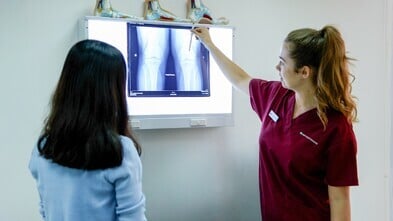
An X-ray uses imaging technology to assess the bones of the knee and detect issues such as fractures or signs of arthritis.
MRI
An MRI provides detailed images of the soft tissues within the knee, including ligaments and the meniscus, to identify injuries or abnormalities.
Ultrasound
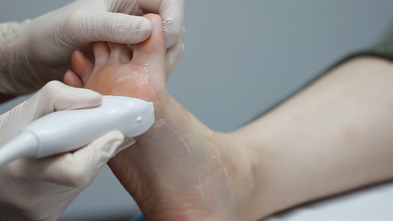
An ultrasound uses sound waves to assess soft tissues around the knee, including tendons, ligaments, or fluid-filled areas.
When Should You Seek a Podiatrist for Knee Pain?
You should consider seeing a podiatrist if your knee pain persists, worsens, or begins to affect your daily activities, mobility, or ability to exercise. A podiatrist can assess factors such as foot alignment, walking patterns, and lower-limb mechanics that may contribute to your discomfort, helping identify potential causes and recommend appropriate management options and treatment for knee pain.
However, some symptoms may require more immediate medical attention. Seek urgent medical care if you are unable to bear weight on the affected leg, have an obvious knee deformity, develop a fever with knee swelling, suspect a fracture, experience rapidly worsening swelling, or have severe knee instability.

Extracorporeal Shockwave Therapy (ESWT)
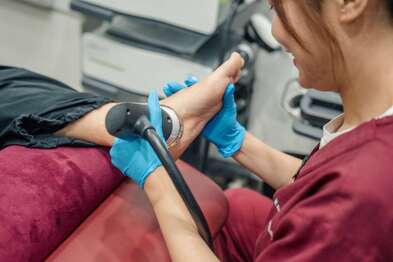
Extracorporeal Shockwave Therapy (ESWT) uses acoustic waves to stimulate the affected tissues, and may support the healing process, reduce pain, and improve mobility. It is commonly used as a non-surgical treatment option for certain chronic knee conditions.
Extracorporeal Magnetotransduction Therapy (EMTT)
Extracorporeal Magnetotransduction Therapy (EMTT) uses electromagnetic pulses to target affected tissues and support tissue repair. It helps reduce inflammation and promote recovery as part of a personalised knee pain management plan.
Targeted Rehabilitation & Exercise Therapy
Targeted rehabilitation involves customised exercises designed to strengthen the muscles supporting the knee, improve mobility, and address factors such as muscle imbalance or movement patterns that may contribute to knee pain. It may also help prevent knee pain and reduce the risk of future injuries by improving lower limb strength and movement patterns.

Custom Foot Orthotics
Custom foot orthotics are specially designed devices that may be recommended when foot mechanics or alignment contribute to knee pain. By providing support and improving lower limb biomechanics, they may help reduce stress placed on the knee during movement.
Surgical Referral
In some cases, such as when there is significant injury, structural damage, or symptoms that do not improve with conservative management, an orthopaedic specialist may recommend surgical intervention.
Depending on the underlying condition, some knee surgeries may be performed using a minimally invasive approach known as arthroscopic (keyhole) surgery. Arthroscopic surgery may be suitable for treating conditions such as certain meniscus injuries, selected ligament injuries, or the removal of loose bodies within the joint. Other conditions may require different procedures, including osteotomy (for younger patients) or partial or total knee replacement.
What Our Patients Say
Hear from Patients Treated for Knee Pain
The podiatrist Jordan help me over the past half year with my frequent insertional Achilles flare ups. Through a regimented physiotherapy program and electroshock wave therapy I haven't had a flare-up in several months. I learned that as long as you stick to the program you'll get better and that it takes time. Friendly knowledgeable and helpful team.
44 reviews · August 2025
The team at East Coast Podiatry in Parkway Parade are super knowledgeable, helpful and patient. They are a motivated team in providing A1 diagnoses with specifically tailored treatment options using traditional techniques, coupled with latest technology. Special shoutout to amazing Georgina & Sharon in helping me to treat my achilles which has been plaguing me for years. The relief felt through their ongoing advice, assistance and treatment plans has been life changing. Thank you so much!
6 reviews · January 2026
Went to the clinic due to pain on my heels, and Dr Georgina has been very helpful in diagnosing the issue and recommending suitable treatment. Sharon is also very friendly and patient with the treatment. The shockwave therapy really helps to heal my achilles heel and the exercises helps in correcting my walking posture.
2 reviews · May 2026
Had a wonderful experience under Dr Peggy’s guidance for the treatment of my Achilles tendon. The support staff is very friendly and considerate as well!
3 reviews · December 2025
After a serious sports injury, I was advised that surgery was likely my best option, along with what sounded like a long and difficult recovery. Before committing to that, I decided to get a second opinion from Mr Yasin Rashid.
From the first appointment, he carried out a detailed gait assessment and took the time to explain what he believed was contributing to my Achilles tendon problem. Rather than rushing towards surgery, he suggested a conservative approach using focused shockwave therapy (fESWT), a progressive strengthening programme, and guidance on modifying my activity while recovering.
The improvement wasn't overnight, but it was consistent. As the weeks went by, the pain became less noticeable, my confidence in the tendon returned, and I was gradually able to get back to training without the same limitations I'd been dealing with before.
I also appreciated that my progress was reviewed at each visit, with the rehabilitation plan adjusted when needed instead of following a one-size-fits-all approach. Mr Yasin was professional, easy to talk to, and always willing to answer questions without making me feel rushed.
Looking back, I'm really glad I sought another opinion before going ahead with surgery. I'm grateful for the care I received and very pleased with the outcome. I'd happily recommend Mr Yasin Rashid to anyone dealing with a persistent tendon or foot injury.
1 reviews · July 2026
I was attended by podiatrist ms gayatri ramesh for my left sole corn issue.She was very caring and patience.
Her service was remarkable n professional.
She treated painlessly.
I strongly recommend East Coast podiatry for any treatment.
11 reviews · April 2026
I have bunion and knee pain, I am happy and satisfied with the services provided by the staff and Dr Michael Lai, he is very patient and explain the procedure clearly , I made my in sole to treat my bunions , the soles very comfortable and fitting to my sandals The staff also friendly , caring and helpful Clinic is very clean , spacious and have many sophisticated machines for therapy and other treatment
9 reviews · Jul 2025
Receive a Personalised Treatment Plan
Complications If Knee Pain Conditions are Left Untreated
When knee pain conditions are not properly assessed or managed, symptoms may worsen over time and affect mobility, physical activity, and daily routines.
Depending on the underlying cause, untreated knee problems may lead to increased pain, reduced joint function, muscle weakness, and difficulty performing everyday movements. In some cases, ongoing stress or damage to the knee structures may contribute to further joint deterioration or an increased risk of recurring injuries.
Management & Prevention of Knee Pain
Management Methods
- Rest and ice: Resting the knee and applying ice helps reduce inflammation and alleviate pain, particularly for overuse injuries.
- Weight management: Maintaining a healthy weight can help reduce the load placed on the knee joint during daily activities.
- Medical treatments: Depending on the condition, knee treatments such as shockwave therapy, medication, injections, or surgical procedures may be considered.
Preventive Care
- Regular exercise: Strengthening the muscles around the knee and maintaining flexibility can help support joint stability and movement.
- Proper warm-up and stretching: Preparing the body before physical activity may help reduce strain on the muscles and knee structures.
- Wear suitable footwear: Supportive shoes can help promote proper alignment and reduce unnecessary stress on the knees.
- Address existing concerns early: Seeking assessment for persistent pain, injuries, or movement issues may help prevent symptoms from worsening.
Book an Appointment
FAQ: Knee Pain Treatment Singapore
Can knee pain go away on its own?
Mild knee pain caused by temporary strain, overuse, or minor injuries may improve with rest, activity modification, and self-care. However, persistent or worsening knee pain may indicate an underlying condition that requires assessment by a healthcare professional to determine the appropriate management approach.
What should I know before undergoing knee pain treatment?
Before starting knee pain treatment, it is important to understand the underlying cause of your symptoms, the available treatment options, and what each approach involves. A healthcare professional will assess factors such as your symptoms, medical history, activity level, and knee condition to recommend a suitable treatment plan.
Can knee pain return after treatment?
Knee pain may return after treatment depending on the underlying cause, severity of the condition, activity levels, and other contributing factors. Following a personalised management plan, including rehabilitation exercises and addressing contributing factors, may help support long-term knee function.
Will I need blood tests or surgery (such as joint replacement) for my knee pain?
Not all cases of knee pain require surgery, blood tests, or further investigations. The need for these assessments or procedures depends on the underlying cause, severity of symptoms, and response to non-surgical treatments.
Blood tests or joint fluid analysis may be used in certain cases to assess for conditions such as inflammation, infection, or gout. Surgery, including procedures such as complete or partial knee replacement, may be considered for specific conditions involving significant joint damage or advanced degeneration.
How can I relieve my knee pain?
Knee pain relief depends on the underlying cause and may involve approaches such as activity modification, targeted exercises, rehabilitation, supportive footwear, custom foot orthotics, or other treatments recommended by a healthcare professional. Seeking assessment can help identify suitable options for managing your symptoms.
How many knee pain treatment sessions will I need?
The number of treatment sessions required depends on factors such as the cause and severity of your knee pain, your response to treatment, and your individual recovery goals. A healthcare professional can provide a more personalised estimate after assessing your condition.
What is the recovery time following knee pain treatment?
Recovery time varies depending on the type of knee condition, treatment approach, and individual factors such as overall health and activity level. Some patients may notice improvement within a shorter period, while others with more complex conditions may require longer-term rehabilitation.
How can I avoid developing knee pain and common knee injuries?
You can reduce the risk of developing knee pain and common knee injuries by maintaining regular exercise, strengthening the muscles that support the knee, using proper techniques during physical activities, wearing suitable footwear, and addressing any movement or alignment issues early.
What is the difference between Shockwave Therapy (ESWT) and Magnetotransduction Therapy (EMTT) for knee pain?
Extracorporeal Shockwave Therapy (ESWT) uses acoustic waves to stimulate targeted tissues and is commonly used as a non-surgical treatment option for certain musculoskeletal conditions. Extracorporeal Magnetotransduction Therapy (EMTT) uses electromagnetic pulses to target tissues and support the management of certain conditions. The suitability of either treatment depends on the underlying cause of knee pain and individual assessment.
Our Podiatrist Team
Meet Your Podiatrist
Experienced And Internationally Trained Podiatrists Ready To Provide The Best Care For You

Your Journey to Recovery
Your Knee Pain Treatment Journey
Book an Appointment
Schedule a consultation with our podiatrist.
Assessment & Diagnosis
We'll assess your condition and recommend further investigations if needed.
Personalised Treatment
Receive a tailored treatment plan to support healing.
Recovery & Prevention
We'll support your recovery and provide guidance to help prevent future issues.
Insurance Partners and Direct Billing
We work with a range of insurance providers and offer direct billing where applicable for a smoother healthcare experience.

Find An East Coast Podiatry Clinic Near You
With five conveniently located clinics in Bukit Timah, Kembangan, Novena, and Orchard & Marine Parade, we provide thorough assessments and personalised care methods to address a wide range of lower limb issues that you or your family members might face. From initial assessment to tailored care plans, we ensure that every step of your journey is handled with expertise and attention to detail.
| Clinic Location | Operating Hours |
| Bukit Timah, Kembangan, Marine Parade, Novena | Mon to Sat - 9am to 6pm, Sun & Public Holidays - Closed |
| Orchard | Mon to Sun - 9am to 6pm, Public Holidays - Closed |
We recommend that you schedule an appointment prior to visiting our clinics.
Orchard
302 Orchard Road
Tong Building #09-02 (Rolex Centre)
Singapore 238862
Tel: +(65) 6884 4123
Kembangan
18 Jalan Masjid
Kembangan Plaza #B1-02
Singapore 418944
Tel: +(65) 6848 5156
Novena
10 Sinaran Drive
Novena Medical Centre #08-13
Singapore 307506
Tel: +(65) 6235 2132
Bukit Timah
1 Fifth Avenue
Guthrie House #02-04
Singapore 268802
Tel: +(65) 6235 9080
Marine Parade
80 Marine Parade Rd
Parkway Parade #08-04
Singapore 449269
Tel: +(65) 6592 8082